

A Historic Flight: Rwanda’s Technological Triumph
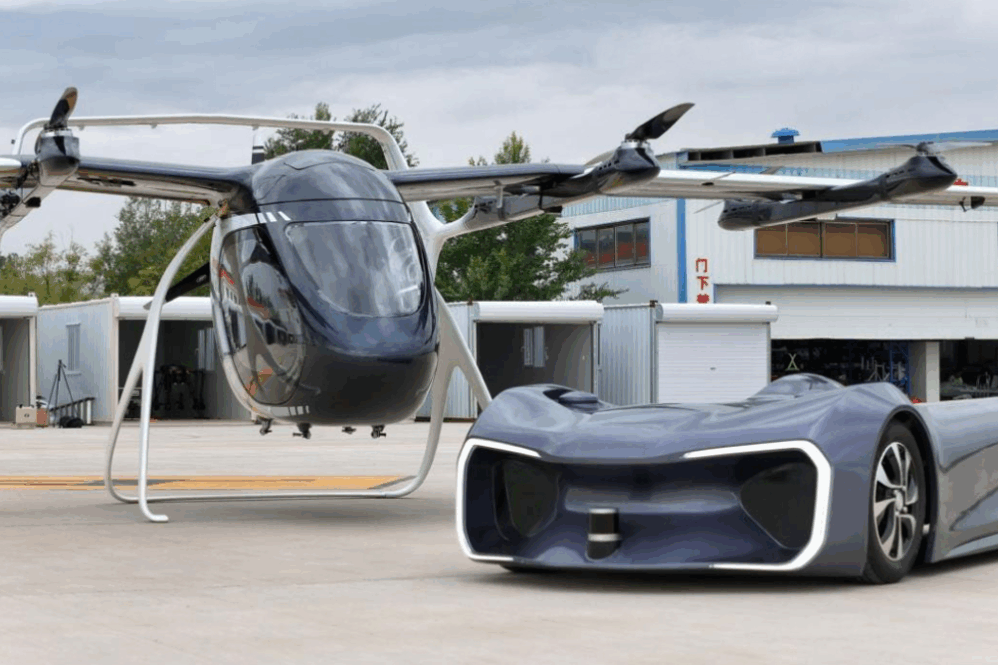
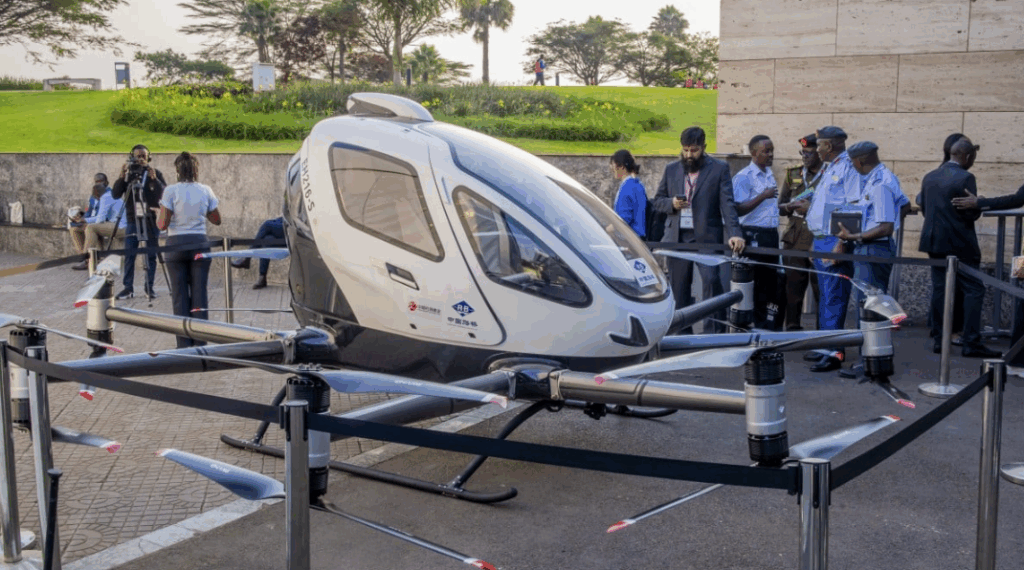
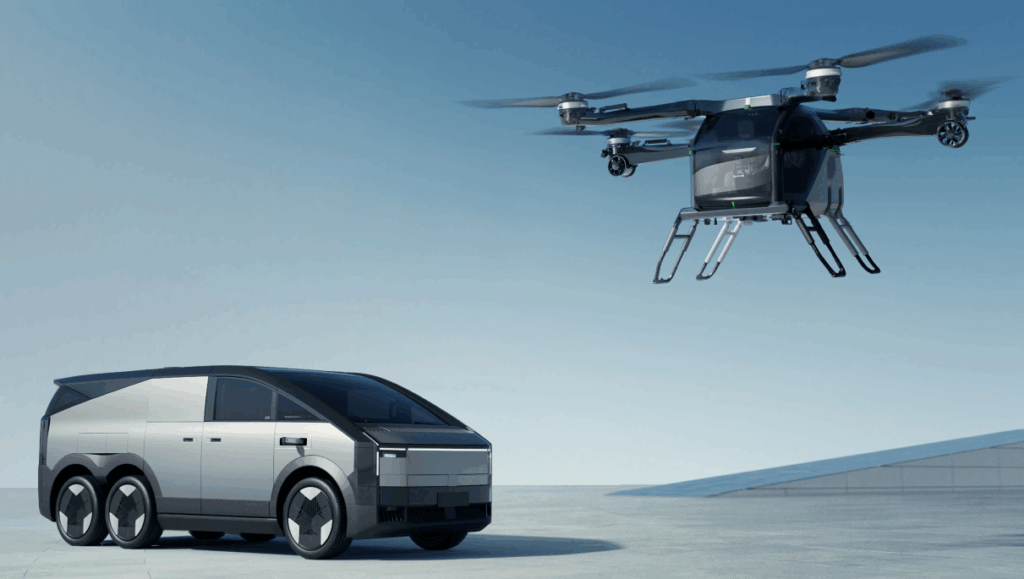
On September 4, 2025, Rwanda launched Africa’s first self-flying electric air taxi. Consequently, this milestone signals Rwanda’s leadership in urban air mobility. The EHang EH216-S Taxi, developed by China’s EHang Holdings Limited, took its maiden flight at the Aviation Africa Summit in Kigali. In addition, this two-seater electric vertical takeoff and landing (eVTOL) aircraft has 16 propellers. It takes off and lands vertically, cruises up to 130 km/h, and carries up to 220 kilograms. Notably, this marks the first public demonstration of such technology in Africa.
Strategic Partnerships Drive Innovation
Rwanda teamed up with China Road and Bridge Corporation (CRBC) to make this happen. Together, they aim to boost innovation and develop infrastructure. Consequently, Rwanda positions itself as Africa’s hub for advanced air mobility. This move attracts international investment and attention. Therefore, Rwanda’s strategic approach highlights its ambitions on the global stage.
Economic Landscape: Growth Amid Challenges
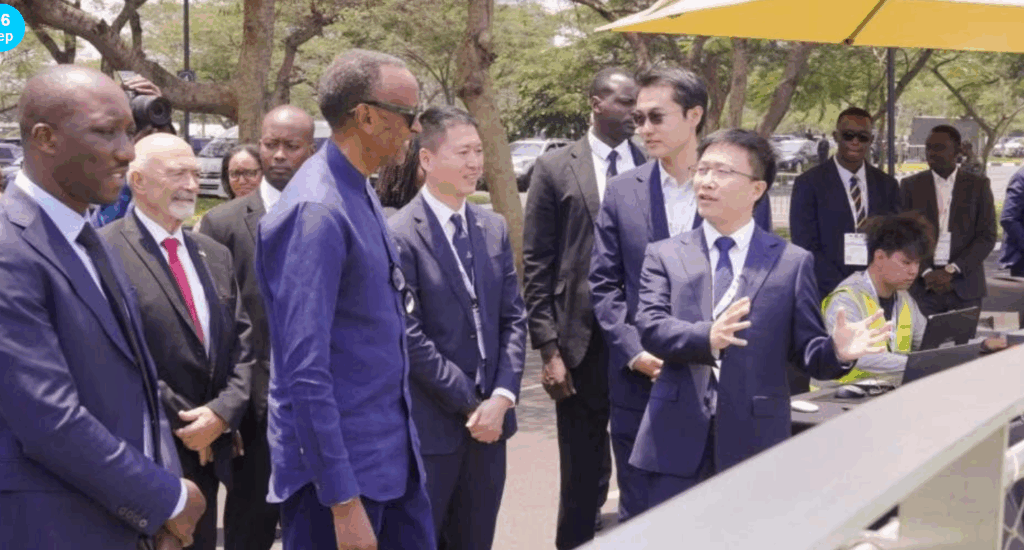
Despite challenges, Rwanda’s economy grows steadily. In 2025, its GDP reached about $966.3 million, with per capita income near $930. The country recorded a 7.8% growth rate in the first quarter alone. For this reason, Rwanda is focusing on diversifying its economy by emphasising sectors like agriculture, services, and technology. Initiatives like the air taxi launch fit into its plan to become a knowledge-based economy.
Youthful Population Powers Development
Rwanda hosts over 13 million people, mostly under 30 years old. This young population offers great potential. The government invests heavily in education and vocational training. As a result, it aims to reduce unemployment and drive economic growth.
Military Strength Supports Stability
The Rwanda Defence Force (RDF) ranks among Africa’s strongest militaries. It plays an active role in peacekeeping missions across the continent. Thus, Rwanda builds a reputation as a stabilising force in East Africa.
Technological Advances from Drones to Air Taxis
Importantly, Rwanda leads Africa in technology innovation, and Zipline’s drone deliveries for medical supplies gained global praise. Building on this, Rwanda now develops autonomous vehicles and smart infrastructure. Furthermore, the self-flying taxi demonstrates its commitment to cutting-edge solutions for urban mobility.
Cultural Shifts Embrace Modernity
Rwanda’s society balances deep traditions with growing enthusiasm for technology. Apart from this, the public interest in the self-flying taxi highlights this shift. Hence, the country moves towards a tech-savvy, forward-looking culture.
Rwanda’s Cleanest Country Claim: Facts and Figures
Rwanda enjoys a reputation as one of Africa’s cleanest countries. However, formal indices show mixed evidence. On the Environmental Performance Index, Rwanda’s EPI score in 2024 sat around 33.4, which placed it among countries with serious challenges in sanitation and water quality. Businessday NG Kigali often ranks highly among African capitals for cleanliness and order in public spaces. Furthermore, the local bans on plastic bags date back to 2008. Umuganda (monthly community cleanups) strengthens national hygiene culture.
Thus, Rwanda earns praise for visible cleanliness, yet “cleanest country” remains more an accolade from public perception and media than a reflection of top scores in all environmental metrics.
Sports Development: Infrastructure, Targets, and Investment
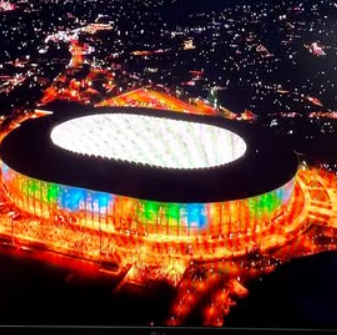
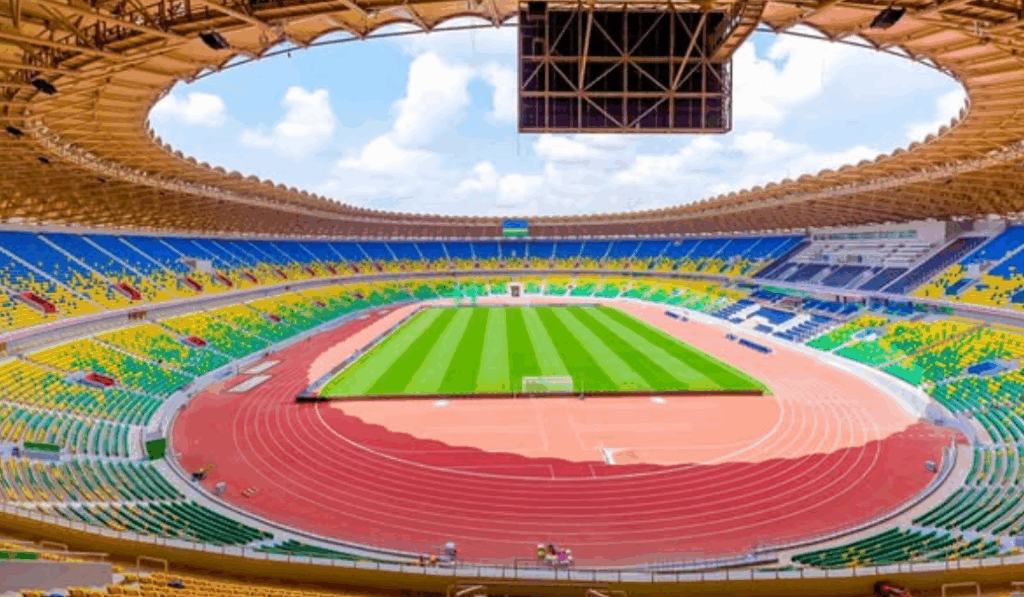
First, Rwanda builds world‑class sports facilities, which are the 3 international stadiums: Amahoro, Kigali Pelé, and Huye. In addition, the government also built 7 district stadiums in Rubavu, Nyagatare, Bugesera, Ngoma, Musanze, Muhanga, and Gicumbi. In fact, the Amahoro Stadium now seats about 45,000, up from 25,000 pre‑renovation. Besides that, the BK Arena serves indoor sports with 10,000 seats.
Second, Rwanda plans massive expansion as the sports ministry targets 540 sports fields by 2029. Moreover, it will be broken down, viz., 360 at the district, 132 provincial, and 34 national levels. The government expects Rwf 30 billion in revenue from sports tourism by 2029. Meanwhile, FERWAFA allocates Rwf 4.79 billion for football infrastructure and media expansion in 2025.
Third, Rwanda hosts major events. It hosted the Basketball Africa League, world cycling events, triathlons, and football tournaments. Hence, these efforts raise participation, economic return, and talent pool.
Education & English Transition: Performance Enhancements
Rwanda transitioned English to an official language alongside French and Kinyarwanda in 1996. Consequently, schools switched Medium of Instruction (MOI) to English at most levels by the early 2000s. The government trains teachers and updates curricula, and based on the policies, Swahili gains status as a fourth official language.
Improved literacy Culture
According to statistics, data shows improved learning after the English MOI shift. In Rubavu District’s lower primary schools, English subject scores rose from ~58.4% to ~62.5% after MOI switched. Science, Elementary and Technology (SET) scores rose from ~28.5% to ~34.6%. Upper primary English rose from ~46.3% to ~49.5%, while SET rose from ~40.6% to ~45.7%.
Moreover, in Ordinary Level exams (2023/24), students passed 66% in science, 64% in math, and 47% in English. rwandadispatch.com
The Rwanda Household Survey (EICV7) finds 76% literacy among persons aged 15 and above. The young cohort (15‑24 years) shows 88% overall literacy. Kigali records 91%, and Southern Province is the lowest at 72%.
Other Strides: Unity, Governance, Human Development
Rwanda reduced primary school non‑attendance heavily. Individuals aged 15+ without any schooling dropped from ~16% to ~10%. Women participation in government remains high. Local governance promotes accountability, while the health indicators, though not detailed here, show decreasing child mortality. On the other hand, the use of technology and digital services now proliferates around the country.
Rwanda’s Regional Leadership Shines
Meanwhile, by launching Africa’s first self-flying taxi, Rwanda takes the lead in innovation. This achievement raises its global profile; hence, investors and partners now watch Rwanda’s tech ecosystem closely. However, the government fosters public-private partnerships to support growth. This proactive approach makes milestones like this possible.
Looking Ahead: Sustainable Urban Mobility
Rwanda plans to expand eVTOL use in public transport, as the goal includes reducing traffic and lowering urban carbon emissions. Additionally, this technology will create new jobs and boost the tech sector. Thus, Rwanda envisions a sustainable and efficient urban future.
Conclusion: Rwanda’s Vision Realized
Rwanda’s launch of Africa’s first self-flying electric air taxi marks a key success. It reflects the country’s drive for innovation, sustainability, and leadership. As Rwanda continues investing in technology and infrastructure, it sets a model for Africa’s future.