

Introduction
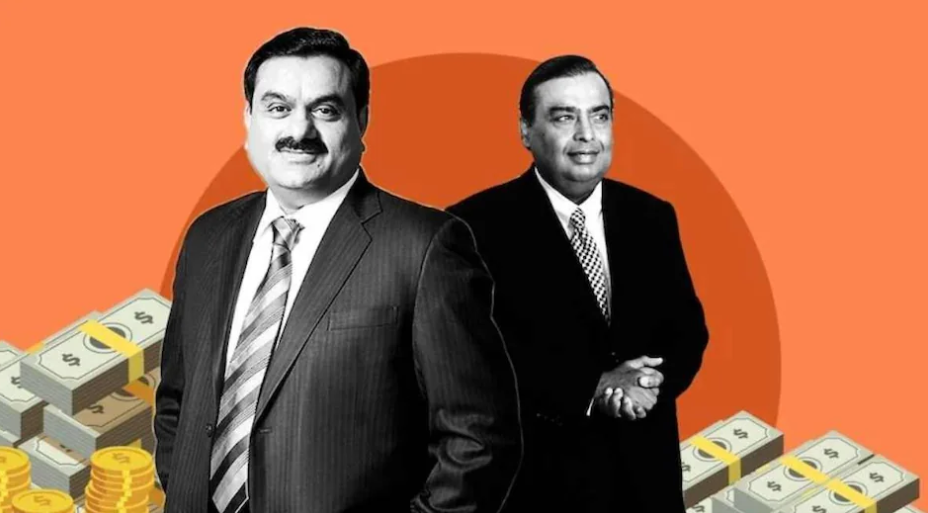
US President Donald Trump’s military confrontation with Iran has triggered a major shift in Asia’s wealth rankings. Consequently, Mukesh Ambani, chairman of India’s Reliance Industries, saw his net worth sharply decline this year. As a result, he lost his crown as Asia’s richest person. Meanwhile, rival industrialist Gautam Adani seized the top spot. The leadership change underscores how geopolitical shocks are reshaping global fortunes, with the energy sector emerging as the primary battlefield.

The Wealth Shift: How Adani Overtook Ambani
The Bloomberg Billionaires Index captured the dramatic reversal. Mukesh Ambani, long considered the wealthiest man in Asia, has seen his fortune dwindle to $91 billion. This happened after losing approximately $16.9 billion in 2026—the largest decline among Asia’s richest individuals. In contrast, Gautam Adani, whose wealth has remained relatively stable, now commands $95.4 billion. Hence, giving him the opportunity to retake the top spot from his long-time rival.
The French newspaper La Libre reported that the Financial Times first revealed this leadership change. They directly linked it to the Middle East conflict. The publication stated, “The king of Asia lost his crown partly because of the Middle East war.”

The Geopolitical Trigger: Trump’s Iran War and Energy Prices
The conflict that erupted on February 28, 2026, when President Trump ordered military strikes against Iranian nuclear facilities. Consequently, that action has sent shockwaves through global energy markets. The resulting explosion in oil prices has created stark winners and losers across industries.
Adani’s conglomerate, heavily invested in ports, logistics, power generation, and energy infrastructure, has successfully navigated the turbulent environment. The group’s diversified exposure to transport and energy-related sectors has allowed it to benefit from the price surge.
Conversely, Ambani’s Reliance Industries, deeply entrenched in petrochemicals, has suffered disproportionately. The conglomerate is feeling the full force of rising energy costs, which have squeezed margins across its core operations. As one analyst put it, the war that Trump launched has inadvertently dethroned one of Asia’s most prominent billionaires.

Market Turmoil: Reliance Shares Plunge
The wealth erosion is rooted in a severe market correction. Reliance Industries’ stock has fallen approximately 13% since the start of 2026. Additionally, its share price is retreating 15% from its 52-week peak. The decline has wiped out a staggering Rs 3.37 lakh crore in market capitalisation.
The stock reached its 52-week high of Rs 1,611 on January 5, 2026. Then, it steadily declined, leaving investors eager for a catalyst to stop the losses.
Foreign Institutional Selling Accelerates
Sustained foreign institutional selling has driven the decline. FII holdings in Reliance fell sharply to 18.67% in March 2026. This drop came from a peak of 28.3% in March 2021. The exodus reflects growing concerns about the company’s near-term prospects and the broader geopolitical environment.
Retail Slowdown: The Isha Ambani Challenge
Adding pressure, Reliance’s retail division, led by Mukesh Ambani’s daughter Isha Ambani, disappointed investors. The business grew only 8%, falling short of its ambitious 20% target. Meanwhile, the retail sector faces challenges from shifting consumer behaviour and rising competition from quick-commerce platforms.
JM Financial remains optimistic and maintains a Buy rating with a Rs 1,730 target price. The brokerage argues that the share price already reflects concerns about near-term retail EBITDA weakness. However, it believes the market hasn’t priced in the 15-16% EBITDA growth in digital business over the next 2-3 years. This growth stems from a 10-11% ARPU CAGR.

The Jio IPO Delay: A Missed Catalyst
Global uncertainty delayed one of Indian corporate history’s most anticipated events—the IPO of Reliance’s telecom subsidiary, Jio. This postponement deprived Reliance of a key catalyst that might have reversed the stock’s decline. Consequently, it also shook investor confidence.
When Jio eventually launches its IPO, it will likely become one of India’s largest, unlocking shareholder value. However, the delay currently worsens the headwinds facing the Ambani empire.
What’s Next for Reliance?
All eyes now focus on Reliance Industries’ Q4 earnings report, releasing after market hours on Friday. Investors seek clarity on margins and Ambani’s ambitious roadmap. This roadmap includes aggressive expansion in digital services, renewable energy, and retail.
The company plans to announce quarterly earnings and recommend a dividend, giving the market a chance to assess war impacts. JM Financial expects a 14-16% EPS CAGR for RIL over the next 3-5 years. Therefore, the brokerage views the current sell-off as a buying opportunity for long-term investors.

Conclusion: A Crown Lost, But the Game Continues
Losing Asia’s richest title to Gautam Adani delivers a symbolic blow to Mukesh Ambani but not a fatal one. His $91 billion fortune still ranks among the world’s largest. Moreover, Reliance Industries remains India’s most valuable listed company by market capitalisation.
The real test lies ahead. Can Ambani navigate the dual pressures of a geopolitical energy crisis and a slowing retail business? Will the Jio IPO eventually provide the spark that reignites investor enthusiasm? How will the rivalry with Adani—now moving from boardrooms to Asia’s wealth rankings—evolve in coming months? Only time will tell.
For now, the crown has changed hands. But in the volatile world of global finance, fortunes can shift as quickly as the tides of war.

Sources for this report include the Bloomberg Billionaires Index, the Financial Times, the Economic Times, La Libre, Aaj TV, and Reuters.