
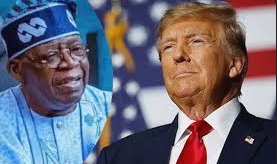
One leader purges dissenters with an iron fist. The other pleads for unity while his party burns. Inside the parallel universes of American and Nigerian politics using the same playbook.
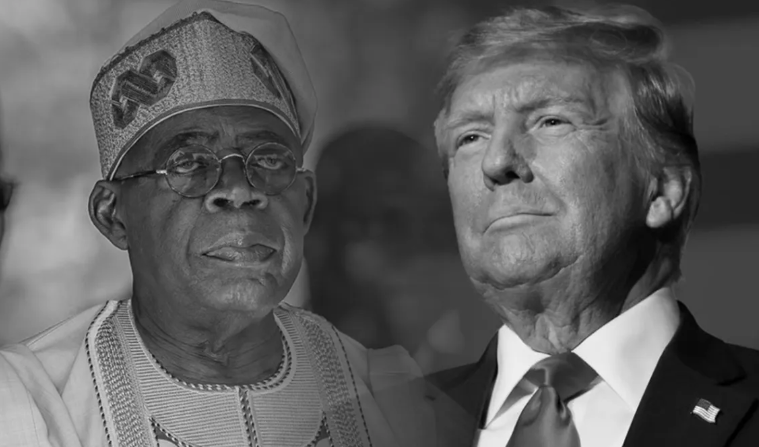
The images could not be more different. On one side of the Atlantic, Donald Trump stands victorious over the political corpse of yet another Republican incumbent. On the other hand, Bola Ahmed Tinubu breaks his Ramadan fast with opposition leaders, promising that “the rule of law will survive and thrive” under his watch.
Yet beneath these contrasting visuals, a fascinating political story is unfolding. Two presidents. Two democracies. Two very different approaches to party primaries, political loyalty, and the very meaning of democratic governance.

The American Way: Total Loyalty or Total Exile
May 2026 will be remembered as the month the Republican Party finished its transformation. On Tuesday, May 19, voters across six states delivered a verdict that echoed from Kentucky to California. The message was simple: dissent is not tolerated.
The Thomas Massie Mess
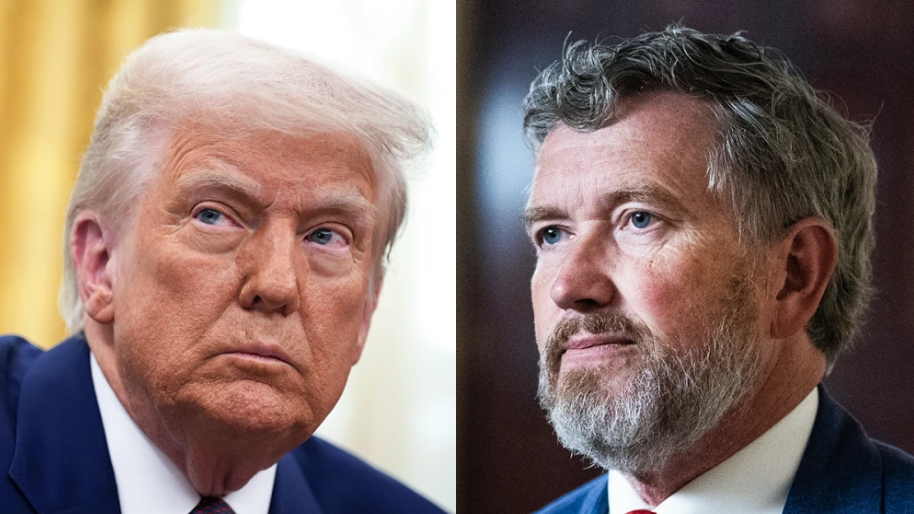
Representative Thomas Massie, a seven-term libertarian from Kentucky’s 4th District, learned this lesson the hard way. Despite a decade of conservative voting records, his refusal to bend the knee proved fatal. Consequently, he had committed three unforgivable sins. He voted against Trump’s “Big Beautiful Bill”. He pushed to release the Jeffrey Epstein client files. And he publicly criticised the administration’s hawkish posture toward Iran.
Trump’s response was swift and brutal. He endorsed Massie’s challenger, Ed Gallrein—a former Navy SEAL with no political experience. Then the money came. Over $32 million poured into the race, making it the most expensive House primary in American history. The airwaves in rural Kentucky were saturated with attack ads. Massie’s crime? Disloyalty. Subsequently, the final margin was decisively explosive. Gallrein took 54.9 per cent. Massie limped to 45.1 per cent.
The Bill Cassidy Loss
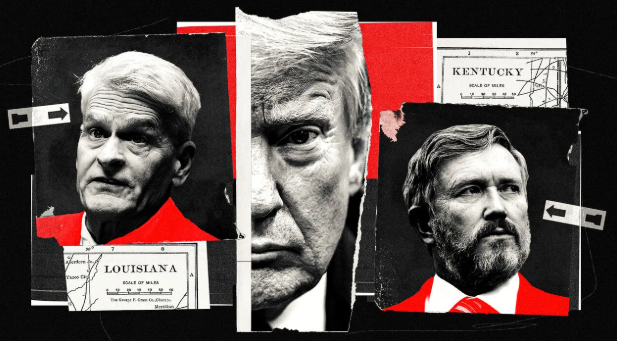
A similar fate befell Senator Bill Cassidy of Louisiana over the same weekend. Cassidy had committed the original sin: he voted to convict Trump during the 2021 impeachment trial. His reward was political execution.
Professor Stephen Voss of the University of Kentucky described the stakes bluntly. “Donald Trump is a lame duck president,” he told the Australian Broadcasting Corporation. His popularity has slipped to record low levels. If Donald Trump can still tip a primary under those circumstances, then that’s a message to Republicans nationwide that at least for now, the Republican Party is Trump’s party and going up against him would be costly.”

Trump: The New Don
The mechanism for this control is now institutionalised. Conversely, winning Trump’s endorsement has become a methodical process that candidates prioritise above all else. Republican strategists describe a two-track system: secure the president’s blessing, then worry about voters. In addition, the White House political operation, which is overseen by Chief of Staff Susie Wiles, personally signs off on most candidates. Physical appearance matters. Television presence matters. Loyalty matters above all.
The Nigerian Way: Direct Primaries and Die-Hard Democracy
Eleven time zones away, a different political drama was unfolding. On May 16, 2026, the All Progressives Congress (APC)—Nigeria’s ruling party—began its nationwide primary elections ahead of the 2027 general elections.
President Tinubu’s approach could not be more different from Trump’s. Where Trump demands submission, Tinubu pleads for fairness. Where Trump punishes dissent, Tinubu invites it to the table.
Party Primaries
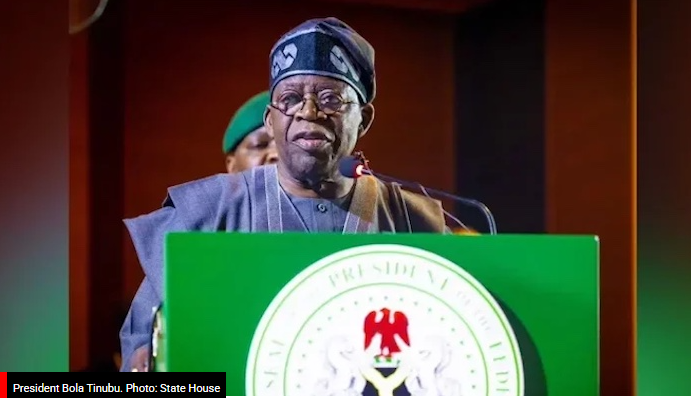
“An election is an essential ingredient of democracy,” Tinubu told party leaders before the primaries began. “Where consensus fails, I urge us all to go into the primaries as brothers and sisters.”
The contrast is stark. Trump ousts those who defy him. Tinubu explicitly warned against “do-or-die politics”, urging winners not to gloat and losers to show sportsmanship. “Our opponents are waiting for us to be against each other,” he said. “We should disappoint them.”
This is not empty rhetoric from a leader who talks about democracy but practises something else. Tinubu has the scars to prove his commitment. “Some of us had been bruised struggling for it,” he reminded party leaders during a Ramadan gathering at the Presidential Villa in Abuja. “We were detained, we protested, we had street demonstrations, and we went into exile. Hence, I am a die-hard democrat.”
Electoral Act 2026
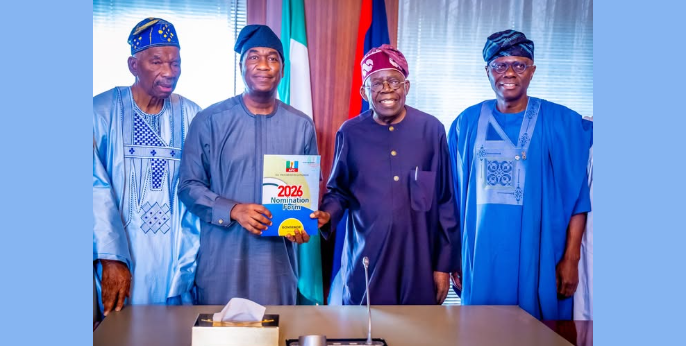
His administration recently signed the Electoral Act 2026 into law, a comprehensive reform package designed to strengthen internal party democracy. The Act recognises only two modes of primaries: direct and consensus. Direct primaries allow all party members to vote—a measure Tinubu has publicly endorsed as providing “better opportunities for party members to participate and determine their representatives”.
The Act also mandates electronic transmission of results, establishes financial autonomy for the election commission, and imposes strict penalties for electoral misconduct. It is, by any measure, a pro-democracy reform package.
The Reality Behind the Rhetoric
But here is where the story becomes complicated. The gap between Tinubu’s democratic ideals and the messy reality of Nigerian politics remains vast.
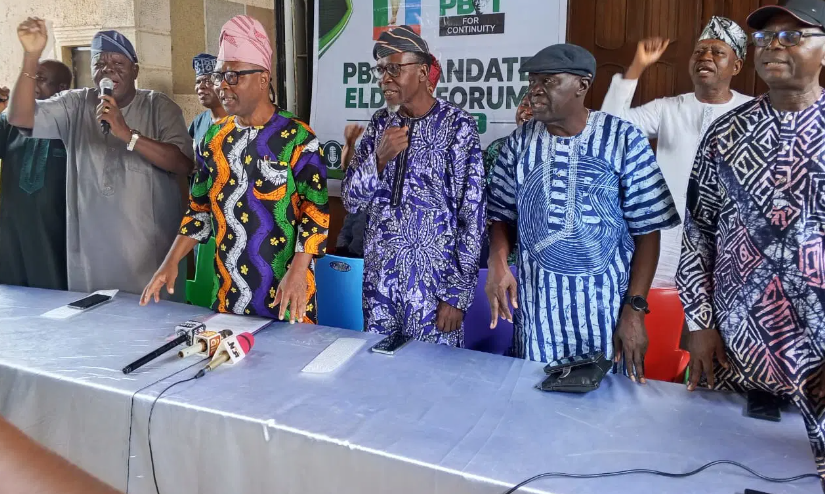
The APC’s primary process has been anything but smooth. For instance, in Oyo State, five governorship aspirants formally petitioned President Tinubu over alleged irregularities in the House of Representatives primaries. They accused party officials of intimidation, arbitrary disqualification of contestants, and what they described as “fabrication of results”.
Furthermore, in Ondo State, aspirants raised alarms that Governor Lucky Aiyedatiwa was allegedly deploying political thugs to attack those excluded from his preferred consensus list. Thus, the group warned of a potential “recurrence of the violent political crises that marred the 1965 and 1983 elections”.
These are not isolated incidents. The APC’s National Working Committee initially pushed for consensus candidates to maintain party cohesion. But widespread resistance from grassroots members forced a retreat. “Reports from many states showed that our members and aspirants would rather subject their aspirations to an election than concede to consensus,” a party source explained.
The result is a party caught between two forces. Tinubu’s democratic instincts pull toward open, competitive primaries. But powerful governors and party bosses push toward imposition and manipulation.
What Senator Jimoh Ibrahim Saw
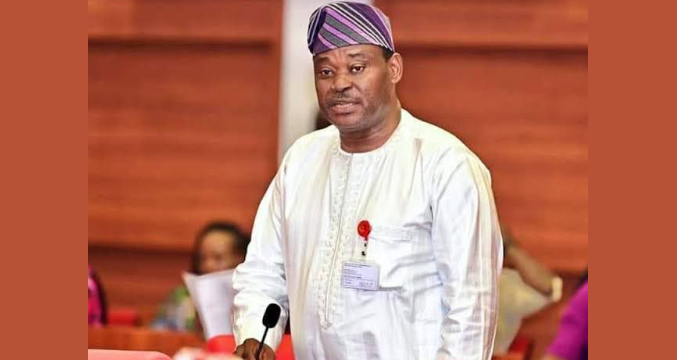
Senator Jimoh Ibrahim offered an intriguing observation during a recent television interview. He described Tinubu as a leader who “does not believe in the aggressiveness of power”—unlike Trump, whom he called “a realist running American democracy”.
Ibrahim contrasted Tinubu with former Nigerian presidents Olusegun Obasanjo and Muhammadu Buhari, both of whom he said had a stronger appetite for assertive leadership due to their military backgrounds. However, Tinubu, by this reading, is fundamentally different. He is a liberal in a system that often rewards authoritarians.
Whether this approach survives contact with Nigeria’s political reality remains an open question. The 2027 general elections will be the test as the new Electoral Act provides the framework. Tinubu’s commitment to democratic principles provides the philosophy. But the street-level violence, the thugs, and the fabricated results that marred the primaries provide a sobering counterweight.
The Bottom Line
Two presidents. Two very different approaches to party primaries and political power.
Trump has chosen the path of consolidation. He is systematically purging dissenters, demanding absolute loyalty, and transforming the Republican Party into an extension of his personal will. No doubt, it is effective. It is brutal. And it is, by all available evidence, exactly what a majority of Republican primary voters want.
However, Tinubu has chosen a different path. He talks about consensus, sportsmanship, and the rule of law. Additionally, he warns against do-or-die politics. Hence, he signed an Electoral Act designed to strengthen internal party democracy.
But the machinery of Nigerian politics may be too powerful for any single leader to tame. The same governors and party bosses who help deliver elections also demand control over the candidate selection process. And when those interests collide with Tinubu’s democratic ideals, the ideals often lose.
Conclusion
The ultimate question is not which approach is more democratic. The fundamental question is which one will produce stable, legitimate governments capable of delivering for their citizens. America and Nigeria are about to find out.