
President Bola Ahmed Tinubu initiates sweeping economic reforms aimed at stabilising public finances. Furthermoremore, he has made audacious reforms which are tough but necessary. In addition, he has ventured into areas other previous administrations have feared hence, the results today are gladenning.
FUEL SUBSIDY REMOVAL
Fuel prices rise came to be as a result of the subsidy removal which has not gone well with the populace. Of constrast to the way of living pre-May 29 2023, petrol cost increases from ₦168 to ₦580–₦600 per litre. Hence, the subsidy removal contributes to an unprecedented inflation surge. Furthermore, the domino effect was also on the cost of basic necessities including food. Food inflation reported above 21.7 per cent by March 2025 which the general populace struggling to meet up with their daily bread. In addition, it unfortunately created wanton security challenges due to more citizens fallen below the poverty benchmark. Apart from this, the Nigerian Bureau of statistics (NBS), published a damning report. It says, subsidy policy has pushed 31.8 million Nigerians into acute food shortage, thereby increasing its poor population.
Birth of CNG
According to reports, it highlight transportation costs tripling hence skyrocketing the cost thereby affecting the product and supply chain. To ease the cost, a compressed natural gas (CNG) initiative was launched. Over 100,000 vehicles adapted to CNG with a target conversion of 1 million vehicles within three years.
LAGOS-CALABAR COASTAL HIGHWAY
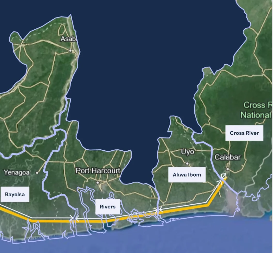
The audacious revamping of the country’s infrastructure deficit has been applauded across board. Hence, the infrastructure targets large‑scale projects to quickly reposition the country on the part of recovery. Furthermore, the Lagos–Calabar Coastal Highway under construction will cover about 700 km from Lagos to Calabar, passing eight states. The first phase, 47.47 km, begins in March 2024 of which 30 km of the Section 1 was commissioned in May 2025. The commissioned section stretched from Ahmadu Bello Way to Eleko Junction. However, the cost per kilometer is put at ₦4 billion which has been heavily criticised. Moreover, the total cost of the project is estimated at a staggering sum of US$11–12.5 billion (approx. ₦14–15 trillion).
Environmental scrutiny: The destruction of wetlands, homes and businesses demolished has brought sharp criticism predicated on priority. Undoubtedly, most environmentalist have continued to complain of the loss of wetlands and the pollution of the country’s waterways. A lot of destruction are ongoing at the cost of development which they believe are needless.
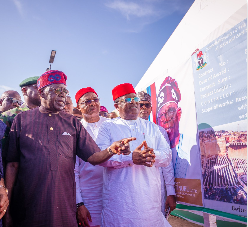
SOKOTO-BADAGRY SUPER HIGHWAY
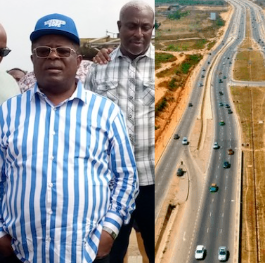
Nigeria embraces transformative infrastructure, and thus the Sokoto‑Badagry Super‑Highway emerges as a game‑changer. First, it slashes travel time dramatically—President Tinubu expects reductions of up to 48 hours from Sokoto to Lagos. Evidently, commuters and freight operators are rejoicing at the faster connections. Therefore, businesses gain when logistics improve, and farmers benefit when markets open. The corridor encompasses over 216 agricultural communities, 58 dams, and over one million hectares of arable land. Moreover, it fuels agribusiness expansion and enhances irrigation potential.
Creation of Economic Diversity
The creation of corridors around the Super highway will cultivate more economic diversity which will impact many lives positively. Especially since the project spans six states and supports Special Agro‑Industrial Zones. Furthermore, it fosters thousands of micro, small, and medium enterprises (MSMEs) nationwide. However, the Federal Executive Council projects up to 1.6 million new jobs to the citizens. For this reason, it is equally projected that a potential GDP surge from $147 billion to $290 billion. Consequently, Nigeria monetises agriculture, industrialises trade, and promulgates inclusive growth.
National Security
The highway will surely secure Nigeria’s future, as it has the potential to open more economic activities in the country. Specifically, with CCTV surveillance, solar‑powered streetlights, security and traffic stations, and modern signage, stakeholders enhance safety along the entire corridor. Furthermore, local and international investors trust stability when infrastructure promotes order and enables economical responses to emergencies.
NELFUND
The unprecedented student loans scheme surfaces as vital catalysts for education stability and security. Nigeria reformed its student loan framework through the 2024 Student Loan (Access to Higher Education) Act, which established NELFUND. As a result, tertiary education becomes more accessible, and specifically ₦22.74 billion reached institutions on behalf of 215,514 students by February 2025.
Renewed Hope for Students
There is hope for Nigerian students who are poor and have no other means to pay for school. Nevertheless, many students from disadvantaged backgrounds are now able to enrol and persist in school. Importantly, expanding higher education access promotes social mobility, which reduces tension and strengthens security. Particularly in regions plagued by instability, engaging youth through education yields long‑term peace.
Loan Loopholes
Admittedly, critics highlight challenges imbedded in the student loan scheme which is generally applauded by most. For example, experts note missing centralised data and widespread scepticism undermining the loan programme’s credibility. So, administrators must improve on its transparency and build trust across board. Nevertheless, the program’s design already includes online applications, flexible repayment plans, income‑adjusted timelines, and grace periods. Accordingly, borrowers face lighter burdens and officials secure better recovery.
RAIL
Rail infrastructure expands as Abuja light rail reopens May 2024 with 45.25 km across two lines recently revived. However, China Development Bank released US$254.76 million loan for the Kano–Kaduna railway of 203 km standard gauge, valued at US$973 million.
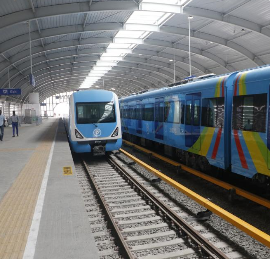
Lagos rail transit expands
The Blue Line metro is operational in Lagos since September 2023. The First phase of 13 km cut across 5 stations. However, a full 27 km line is expected to carry 500,000 passengers daily which will reduce the burden on the roads. In addition, the Red Line commuter rail has been operational since October 2024. Furthermore, the 37 km tracks from Agbado to Oyingbo will enhance urban mobility with easy access from neighbouring state.
U.S TRADE WAR
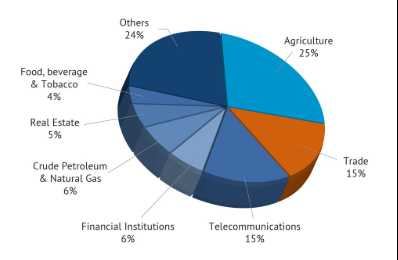
External pressure confronts Tinubu’s foreign policy as the U.S. reimposes tariffs under the Trump administration. The 10 per cent blanket tariff plus 14 per cent “reciprocal tariff” on Nigerian goods is nothing but bizzare. However, to avoid a retalatory policy the government is pursuing a WTO resolution on International trade. Nevertheless, the Manufacturers Association of Nigeria (MAN), warns tariffs may eliminate ₦1–2 trillion in agricultural exports annually. Similarly, the Trade Minister has acknowledged that over 90 percent of Nigerian exports to the U.S. comprises crude oil products and minerals. In spite of the US tariffs, Tinubu’s economic model however emphasizes diversification, infrastructure, and investment.
U.S VISA BAN
The US visa ban history resurfaces as Trump’s original travel restrictions included Nigeria and some 3rd world nations. Despite this, the Government reacts diplomatically as the deportation pressure continues to escalate. Furthermore, the U.S. seeks African countries to accept Venezuelan and third world‑country deportees of which Nigeria declines. Foreign Minister Yusuf Tuggar states the country cannot accommodate deportees due to internal challenges and a population size of 230 million.
Reforms Attractive to Investors
The government asserts that the reforms are working as its attracting foreign investors. Furthermore, investors interest rises as the naira appreciates +7 per cent since November as Local bonds yield up to 25 %. The Foreign Direct Investment drawn to Nigeria as a frontier market is significantly high. Furthermore, this is due to the subscription to infrastructure via PPP and internal revenue generation which has been prioritised. Additionally, the Economic growth of the country is estimated at 3.8–4.0 per cent with inflation, and fuel prices are stabilising.
The government has made it clear that the fuel subsidy savings are been directed into specific development. In summary, the 2024 savings is estimated at ₦5.4 trillion which have been directed at tailor specific projects. Some of the programs and projects include the student loans, consumer credit, and the Presidential CNG Initiative. Furthermore, the FAAC allocations has surged from ~₦760 billion monthly in 2023 to ₦3.2 trillion in 2024. Additionally, the bold reforms in NNPC governance is now edging towards transparency and the market forces now replacing distortions.
Reforms Win Global Recognition Amid Strong GDP Outlook and Security Successes
Nigeria’s economic and security outlook has turned a major corner under President Bola Ahmed Tinubu. With GDP growth projections anchored at 3.4% by the International Monetary Fund (IMF) and 3.6% by the World Bank. Moreover, the country’s economic trajectory continues to climb. More impressively, Tinubu’s administration has cleared Nigeria’s $3.4 billion IMF loan from the COVID-19 era, signaling renewed fiscal discipline. At the same time, Nigeria has made bold moves on national security, including the arrest of high-profile terrorist leaders. Furthermore, the government has also requested for the extradition of a notorious Chinese gang leader.
Credibility
From day one, Tinubu launched economic reforms aimed at restoring credibility. As a result, Moody’s upgraded Nigeria’s credit rating to ‘B3’, citing stronger external buffers and a rebound in investor sentiment. Nigeria’s foreign reserves now stand at $41 billion, giving the Central Bank a much-needed cushion to support currency stability. And in addition, to maintain external obligations.
Mixed Reactions
However, the road hasn’t been entirely smooth. Despite progress in clearing international debt, domestic fiscal pressure remains intense. In 2024 alone, Nigeria spent N9.717 trillion on debt servicing while earning N8.654 trillion in retained revenue. Undoubtedly, putting the debt-service-to-revenue ratio at approximately 112% — far above the administration’s claimed 40%. Still, experts acknowledge that clearing the IMF debt has restored global confidence in Nigeria’s repayment discipline. For that reason, setting the stage for future relief on borrowing terms.
Security
Meanwhile, Tinubu has tackled insecurity with equal vigor. In July 2025, Nigerian forces captured Mahmud Muhammad Usman, a top commander of the terror group Ansaru. In addition, it captured Mahmud al-Nigeri, the leader of the extremist Mahmuda group. Their arrests sent a clear message: Nigeria will no longer tolerate the destabilization of its northern territories. These arrests significantly disrupted terror cells across the Sahel corridor, easing regional tensions. With that success, its now opening pathways for economic recovery in previously affected zones.
Interpol
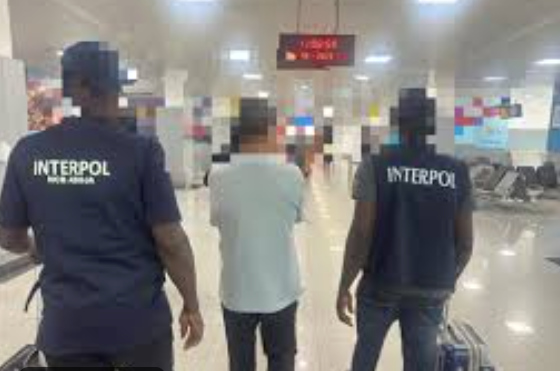
In another bold move, Tinubu’s administration extradited Dai Qisheng, a high-profile Chinese criminal wanted for violent organized crimes. Nigerian authorities coordinated with Interpol to apprehend Dai in Abuja which was a well coordinated operation. The criminal was arrested on August 8, 2025, and was successfully extradited to China within a week. This action not only deepened Nigeria’s diplomatic credibility but also positioned the country as a responsible global security partner.
Subsidy
Moreover, the administration’s controversial removal of fuel subsidies in 2023 initially sparked public outcry. Yet, by 2025, the strategy began to yield visible benefits. Freed-up funds now flow into capital projects, education, and transportation. As inflation shows early signs of easing, consumer confidence is beginning to return.
Debts
With reforms reshaping both economic and security frameworks, international observers now recognize Nigeria as a rising force in Africa. Although challenges remain — particularly around domestic debt sustainability — Tinubu’s ability to deliver tangible results is undeniable.
The Giant is Awake
In conclusion, President Tinubu’s administration stands on a foundation of strategic action and measurable gains. From GDP growth to IMF clearance, from terrorist arrests to diplomatic wins, Nigeria is not only stabilizing. It is stepping back into global relevance and more importantly as the true giant of Africa.
CONCLUSION.
Differring from the norm, Tinubu dismantles the subsidy, floats the naira, and re-engineers infrastructure. He resists external pressure, and allocates savings to rail, road, energy, and social programs. Bold reforms provoke hardship yet aim to reposition the economy. However, the Naira floats is establishing a market discipline, coupled with the subsidy removal, thereby reallocating trillions for massive development. Furthermore, the coastal highway poised to transform citizens mobility and the rail expansion will definitely reshape urban transit. Despite his sweeping reforms, the government’s resistance to the Venezuelan deportees from the US asserts its sovereignty. Furthermore, the administration’s tariff diplomacy prioritises WTO engagement over individual countries, and investment inflows respond to restructuring. However, the economic reforms is been greeted with mixed reactions as the common masses burn out.
In summary, Nigeria harnesses infrastructure and education financing to empower progress. The Sokoto‑Badagry Super‑Highway accelerates trade, agriculture, MSMEs, jobs, GDP growth, security, tourism, and energy. Concurrently, student loans broaden access to higher learning, fortify education stability, and bolster national security through youth inclusion. Together, they unify vision and action to transform Nigeria’s socio‑economic landscape. Statistical data supports an audacious reform trajectory. This period defines Tinubunomics.