

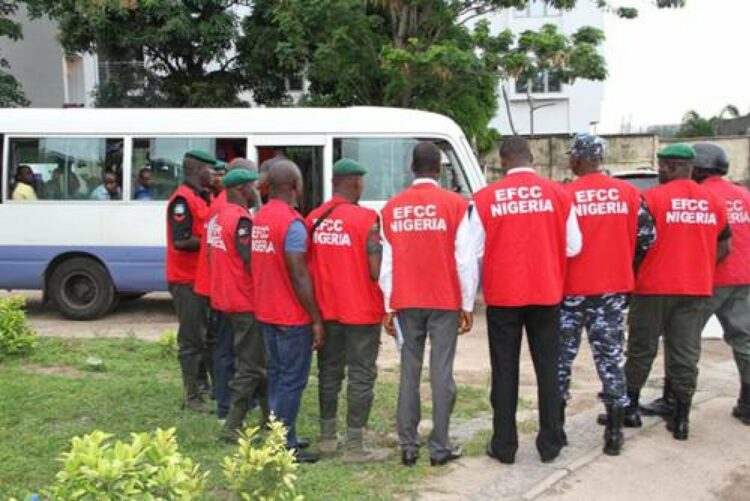
LAGOS — The Economic and Financial Crimes Commission (EFCC) of Nigeria announced on March 10, 2025, that it recovered nearly $500 million in illicit funds during the previous year. This recovery marks a significant milestone in the agency’s ongoing fight against corruption and financial crimes.
Record Convictions and Asset Seizures
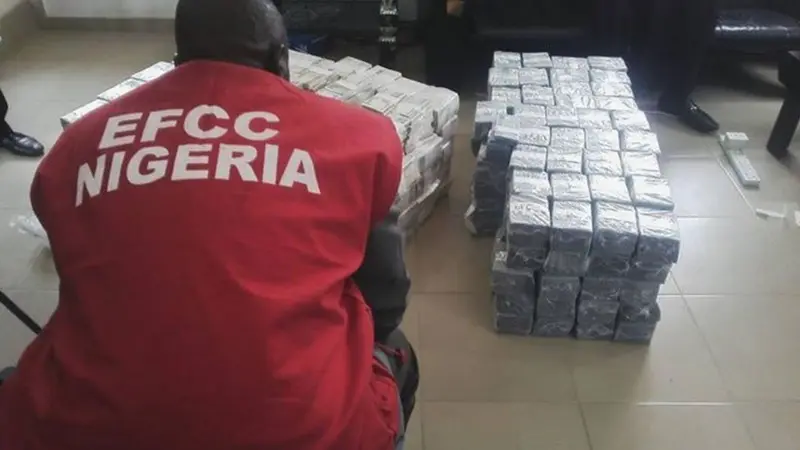
In its annual report, the EFCC revealed it secured a record 4,111 convictions in 2024, the highest number since its establishment over two decades ago. The agency’s efforts included the seizure of substantial assets, such as 931,052 metric tons of petroleum products and 975 real estate properties. The total recoveries also encompassed various currencies, including ₦364.6 billion, $214.5 million, and £54,318.
Reinvestment of Recovered Funds
A portion of the recovered funds has been reinvested into government initiatives aimed at benefiting Nigerians. Notably, ₦50 billion was allocated to the Nigerian Education Loan Fund (NELFUND), which provides financial assistance to students pursuing higher education. This initiative is designed to empower youth and contribute to national development.
Challenges Persist Despite Progress
Despite these achievements, Nigeria continues to grapple with deep-rooted corruption. According to Transparency International’s latest Corruption Perception Index, Nigeria ranks 140 out of 180 countries. Many citizens believe that corruption plays a significant role in the widespread poverty experienced across the nation.
Statements from EFCC Leadership
EFCC Chairman Abdulrasheed Bawa commended the dedication of his team and emphasized the importance of international collaboration in asset recovery efforts. “The recovery of nearly $500 million demonstrates our commitment to eradicating corruption and ensuring that stolen wealth is returned for public benefit,” Bawa stated.
The EFCC reiterated its resolve to enhance its capacity and knowledge base while continuing to work with various stakeholders to strengthen its anti-corruption framework.