


How Satellite Tech, Smart Agriculture, and Next-Gen Logistics Are Reshaping the World’s Final Growth Frontier
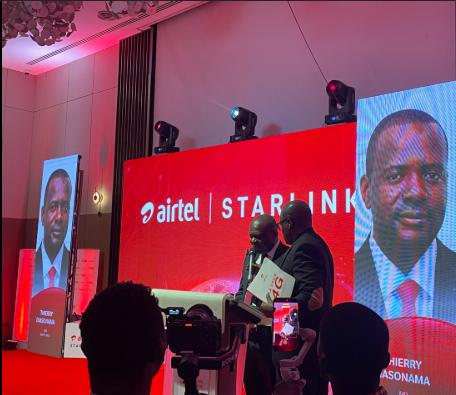
The Democratic Republic of Congo now hosts a watershed moment. On 14 August 2026, Airtel and Starlink launched Africa’s first commercial satellite-to-phone service. This is not merely a product launch. It is a declaration. Africa’s digital decade has officially arrived.
For millions beyond fibre’s reach, the implications are staggering. Roughly 400 million Africans remain offline. Furthermore, 250 million live entirely outside terrestrial network coverage. In the DRC alone, only 30% used the internet in 2023.
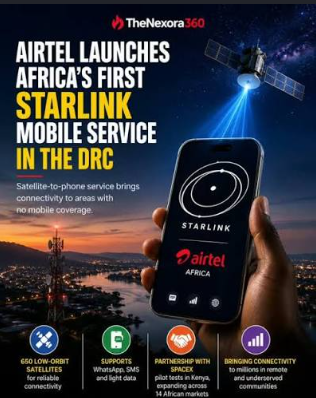
The new service allows compatible smartphones to connect directly to Starlink’s 650-strong satellite constellation. Importantly, it requires no dish or specialised equipment. It supports SMS and light-data applications. For instance, WhatsApp messaging becomes a lifeline for farmers and health workers. It also aids mining companies and logistics operators in remote, conflict-affected regions.

Beyond Connectivity: Africa’s Digital Economy Takes Flight
This launch arrives at an inflexion point. Africa’s digital economy is valued at roughly $180 billion today. That represents 5.2% of continental GDP. Moreover, it is projected to surge to $712 billion by 2050.
Mobile technologies contributed $240 billion in 2025. That figure equals 7.8% of GDP. By 2030, experts expect this to grow to $290 billion. Meanwhile, the continent’s tech ecosystem is consolidating in 2026. Artificial intelligence is moving from experiments to operational deployment. Consequently, 78% of African CEOs now expect growth heading into 2026. That is up from 64% in 2024.
Data centre capacity is rapidly expanding. Installed capacity could triple to 1.2 gigawatts by 2030. This digital backbone is attracting unprecedented investor attention. As a result, Africa is transforming from a frontier market into a strategic global imperative.
The Agricultural Revolution: Feeding a Continent, Powering the World
Technology is fundamentally reshaping African agriculture. This sector directly employs over half the continent’s workforce. For example, the African Development Bank’s TAAT programme has increased crop yields by up to 69%. It has generated more than $4 billion in additional value.
Furthermore, TAAT has reached over 25 million farmers across the continent. Its Phase III launched in June 2026. It expands access to certified seeds and climate-smart technologies. It also provides digital advisory services and sustainable financing.
Satellite connectivity is the invisible thread tying these innovations together. It delivers real-time weather data and market prices. It offers precision farming guidance to smallholders. Previously, these farmers had zero access to such information. However, the yield gap between African farms and global averages still hovers near 40%. Satellite-guided tools can close that gap within a decade.
With 60% of the world’s uncultivated arable land, Africa is poised to become a global food powerhouse. Intra-African agricultural trade could triple if value chains are digitised effectively. Accordingly, global commodity markets are watching closely.
Logistics and Trade: The AfCFTA Supercharges Growth
The African Continental Free Trade Area (AfCFTA) creates a unified market of 1.4 billion people. Its combined GDP exceeds $3 trillion. Full implementation could boost intra-African exports by over 80%. As a result, it could generate up to $450 billion in additional revenue by 2035.
Currently, intra-African trade stands at only 15% of total trade. In Europe, that figure is 60%. AfCFTA aims to change this dramatically. On 19 May 2026, the Secretariat designated Kenya, Morocco, and Nigeria for the ADAPT rollout.
This trade revolution is driving explosive logistics tech growth. In February 2026, logistics startup funding ($119.6 million) surpassed fintech ($54.1 million) for the first time. Africa’s logistics market is projected to hit $113 billion by 2029.
Digital transformation is becoming its backbone. Real-time tracking and mobile payments are now standard. Furthermore, AI-driven supply chain coordination is reshaping cross-border trade. Manufacturers can now source raw materials and move goods across borders with unprecedented efficiency.
The Satellite Revolution: Closing the Final Frontier
Starlink’s African expansion illustrates the massive opportunity. By June 2026, it had reached 26 African markets. It now connects roughly 300,000 customers. Moreover, it has connected over 1,600 schools and 2,000 healthcare centres across the continent.
Its landmark Direct-to-Cell partnership with Airtel Africa is transformative. It could extend satellite connectivity to 174 million subscribers across 14 markets. Nevertheless, competition is intensifying. Starlink secured its 27th market in Côte d’Ivoire in July 2026.
Amazon LEO (formerly Project Kuiper) has also entered the fray. It is licensed to operate over 3,000 low-earth-orbit satellites in Nigeria. Similarly, Vodacom partnered with Starlink across several markets. Consequently, the LEO satellite market in Africa and the Middle East could reach $1.3 billion by 2033.

The Road Ahead: Challenges and Promise
However, significant obstacles persist. Only 36% of Africans were online in 2025. That compares poorly to the global average of 74%. High smartphone prices and costly data bundles continue to leave millions disconnected.
Regulatory fragmentation across 54 countries adds another barrier. Licensing costs vary by a factor of 18.5. An outdated 25-year-old ITU rule on power flux density could also limit service quality. Nevertheless, policymakers are beginning to harmonise frameworks.
Despite these challenges, the momentum is undeniable. Airtel plans to expand this satellite-to-phone service across all 14 African markets. It awaits regulatory approval in each country.
As Airtel Africa CEO Sunil Taldar stated, “By combining Airtel’s terrestrial network with Starlink’s satellite technology, we are extending essential connectivity beyond the limits of conventional mobile infrastructure.”

A Continent on the Cusp
The DRC launch is more than a technological first. It is a proof of concept. Africa can leapfrog generations of infrastructure constraints. Satellite technology bridges the connectivity gap. Agricultural innovation feeds millions. Digital trade unlocks continental commerce.
Africa is not just opening. It is accelerating toward a future as a dynamic global growth engine. The world is watching. The time to invest is now.