
Introduction: The Quietest Power Grab in History
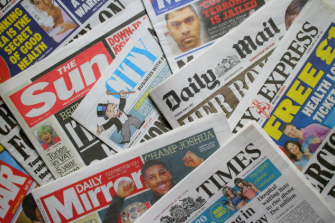
For centuries, the quiet acquisition of the highest office has not happened on the battlefield but in the newsroom. The presidency remains the most coveted prize in any democracy around the world. Moreover, media barons have secretly carved out that prize through control of the printing press and broadcasting antenna. Decades of evidence from Africa to Europe reveal a disturbing pattern of manipulation. Journalists have disguised propaganda as objective reporting throughout this entire historical period.
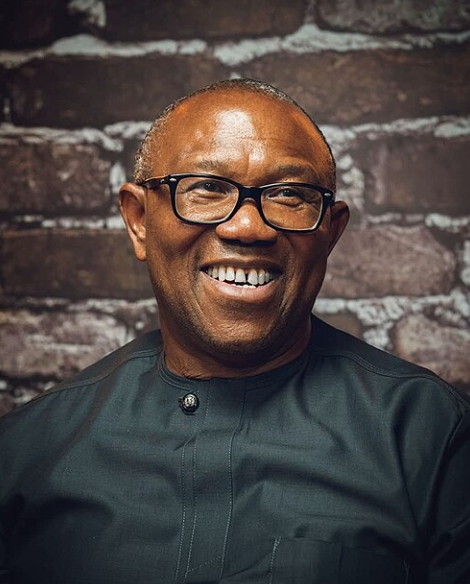
Wealthy media owners have consolidated political power through direct ownership of news outlets. And now a new political figure named Peter Obi has emerged without any media assets whatsoever. He owns no newspaper and controls no television channel or radio network. Only social media remains available for his political survival in Nigeria. And this single weakness could prove to be his tragic undoing in 2027, notwithstanding his vibrant fans and cult-like following.
The Nigerian Blueprint: How Journalism Became a Weapon Before Independence
The modern template for media-driven political ascendancy first emerged in colonial Nigeria before the 1960 independence. Two nationalist titans recognised a fundamental truth that would shape African politics for generations. Nnamdi “Zik” Azikiwe and Chief Obafemi Awolowo understood this truth better than anyone else of their era. The man who controls the news ultimately controls the nation itself. Their fierce rivalry birthed a political tradition that endures to this very day across Africa. Conversely, media ownership became the foundation of political power in post-colonial Africa.
Azikiwe’s West African Pilot: The First Political Megaphone
After returning from the United States in 1937, Nnamdi Azikiwe launched the West African Pilot newspaper in Lagos. He had studied political science and journalism at Howard University before returning home to Nigeria. The new publication achieved a circulation of 6,000 copies per day initially. By 1950 that figure had swelled to more than 20,000 daily copies nationwide. The paper dedicated itself to the fierce fight for independence from British colonial rule. It introduced a brand of popular journalism never seen before in West Africa. Azikiwe personally edited every edition of the Pilot from 1937 to 1947. He indeed forged a powerful political tool in those ten critical years of struggle.
Through the Zik Group of Newspapers, Azikiwe controlled five major publications by 1944. Thus, he relentlessly propagated his political message through every single one of them. His newspapers also promoted the African Continental Bank constantly to readers. This created an integrated ecosystem of political and financial influence that would last for decades. That ecosystem eventually propelled Azikiwe to the ceremonial presidency of Nigeria in 1963. The first proof of concept had been successfully delivered to the political class. Ultimately, media ownership has proven itself as the pathway to the highest office in the land.
Awolowo’s Nigerian Tribune: The Voice of the Western Region
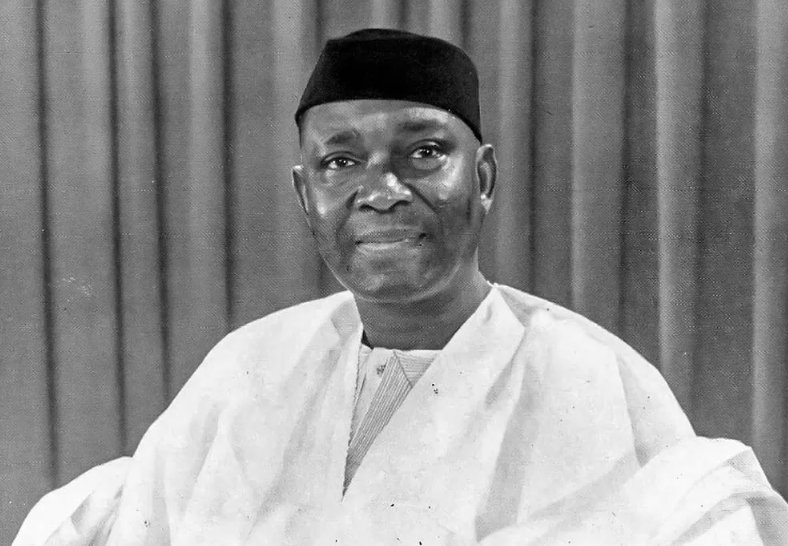
Chief Obafemi Awolowo, the brilliant strategist from Ikenne, was not content to watch quietly from the sidelines. He established the Nigerian Tribune on November 16, 1949, in Ibadan, Western Nigeria. He founded it alongside his wife Hannah Dideolu as a powerful political mouthpiece. The Tribune became the platform for Yoruba political interests and Awolowo’s ambitious welfare programmes. Today the Nigerian Tribune holds the title of the oldest surviving privately owned newspaper in Nigeria. It stands as a testament to the enduring power of media-based political machinery in Africa.
A fierce war of words erupted between the Azikiwe and Awolowo camps throughout the colonial era. As historians have documented, rival newspapers engaged in aggressive warfare that polarised the electorate sharply. The polarisation happened along ethnic lines for most of 1948, according to archival records. The “Zombie Press”, as observers later called it, had effectively been born in this period. By the time Nigeria gained independence, the blueprint was locked in permanently. Media ownership had proven itself equal to electoral power in the Nigerian context.
The Global Phenomenon: Silvio Berlusconi Masters the Art
Across the Atlantic, a more sophisticated and dangerous model was perfecting itself in Europe. If Nigerians pioneered the use of print media for political conquest, Italy went much further.
The Global Phenomenon: Silvio Berlusconi Masters the Art
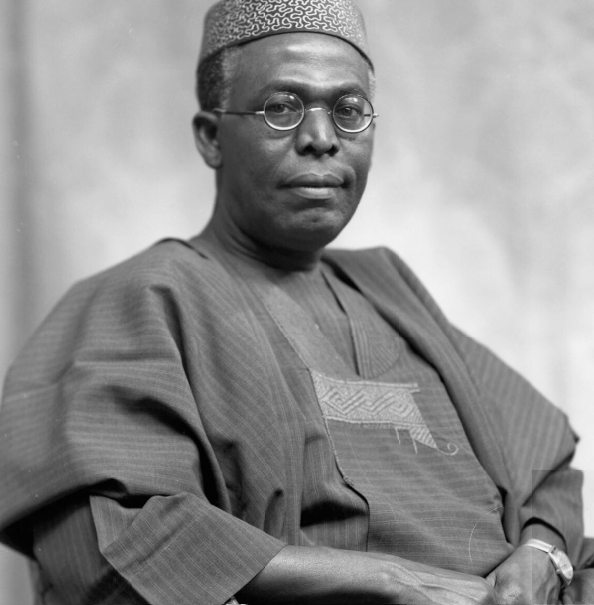
Across the Atlantic, a more dangerous model took shape. Nigerians pioneered print media for political gains, while Italy’s Silvio Berlusconi weaponised moving images.
From Television Mogul to Prime Minister
In the 1980s, Berlusconi acquired Italy’s three largest private TV stations through questionable methods. Despite private ownership being illegal, laws bent and judges fought. By 1994, his media empire controlled 90% of the TV audience, aided by state networks under his party’s influence.
A television screen became a tool against democracy. Berlusconi, controlling much of Italy’s media, served three terms as prime minister. His entertainment-heavy programming dulled the electorate, boosting his populist party, Forza Italia. The strategy was clear: control public perception and secure the presidency.
The Next Generation: Abiola and Iwuanyanwu Follow Suit
In Nigeria, wealthy businessmen continued this tradition, knowing political ambition required media control.
MKO Abiola’s Concord Group
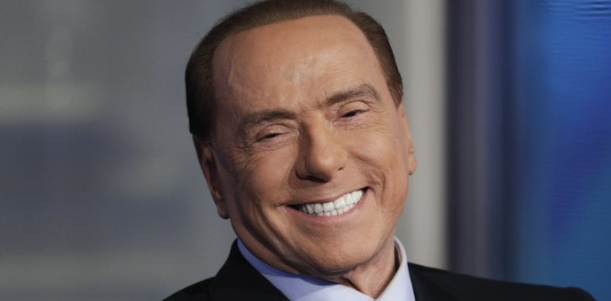
In 1980, Moshood Kashimawo Olawale Abiola founded the Concord Group, including National Concord and Weekend Concord. His wife, Dr Doyin Abiola, led as editor and managing director. In 1993, the Concord newspapers became a powerful political tool during Abiola’s presidential run, which he won fairly. However, the military junta stole the prize, shutting down the media empire in 1994. The lesson remained: media machines capture presidencies.
Emmanuel Iwuanyanwu’s Champion Newspapers
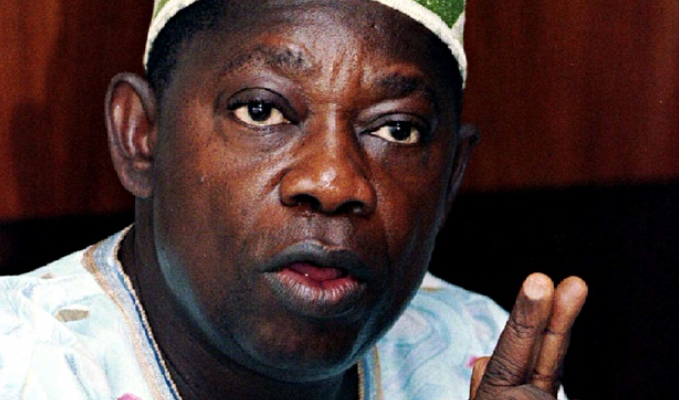
Chief Emmanuel Iwuanyanwu launched Champion Newspapers in 1988 to fill Nigeria’s media gap. His political career began in the 1980s, serving in Imo State’s House and as commissioner. For Iwuanyanwu, the newspaper was a political vehicle, a springboard for higher office.
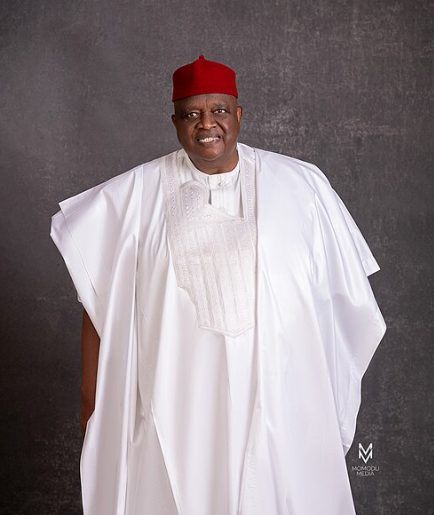
The Peter Obi Conundrum: A House Built on Sand?
Today, Peter Obi, former Anambra Governor and former Labour Party candidate, energises young Nigerians. Digital supporters called “Obidients” mobilise online through TikTok, Twitter, and apps. Obi brought fresh energy to Nigerian politics, but a critical question remains.
What Has Peter Obi Actually Built?
Obi owns no newspaper, TV, or radio network. His media empire is a blank slate. This strategic error has been documented: traditional media owners will unite in 2027 elections. Besides, editors and anchors loyal to wealthy proprietors will shape narratives. Apparently, Obi’s digital followers cannot match this coordinated media force.
Obi lacks control of his narrative. The Labour Party platform, which he relies on, does not belong to him. Factional battles threaten his return in 2027. Party leaders disown social media accounts, revealing organisational chaos.
Obi’s political structure depends on others’ goodwill, not media ownership.
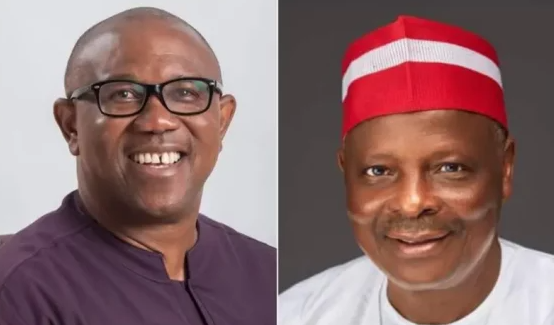
Breaking: The “Obidient” Mirage
Political analysts argue the “Obidient” movement faces institutional power walls. Meanwhile, Nigerians are frustrated with corruption, insecurity, and economic woes. Social media amplifies voices but does not create strongholds.
By contrast, Buhari had the print media during his early campaigns. Tinubu quietly acquired media influence in Lagos. Atiku mobilises media platforms during runs. Unfortunately, Obi has none of these assets.
However, a digital-only approach cannot win Nigeria’s presidency. For instance, most voters remain offline. Radio dominates rural communication; newspapers influence elites; TV shapes urban views. In short, Obi controls none of these.
Exclusive Breaking
Documents reveal Obi’s precarious political position:
Labour Party chairman Nenadi Usman declared it too late for Obi to contest on their platform. Therefore, Obi faces accusations of running on a socialist platform without grassroots activism. Political elites orchestrate a media blackout, isolating Obi from mass communication. In fact, Obi’s digital base remains fragile. Social media hype differs from political infrastructure. Tweets do not block votes. Influencers do not guard ballot boxes. Hashtags do not form coalitions.
Final Verdict
History shows media-driven political success requires ownership of newsprint and broadcast licences. Azikiwe, Awolowo, Abiola, and Berlusconi built megaphones for their campaigns. Consequently, candidates without media control lag behind.
Peter Obi failed to learn this lesson.
A man with no media, no party platform, and only a smartphone risks defeat. The “Obedient” movement holds passion but lacks infrastructure. The system it opposes may absorb it, thereby channelling support to candidates with real machinery. Conclusively, perhaps this is one of the reasons he keeps hopping from different parties. Regrettably, he just ported to NDC, making him the fourth and perhaps the most mobile cross-carpeter, namely from APGA, PDP, LP and now NDC.
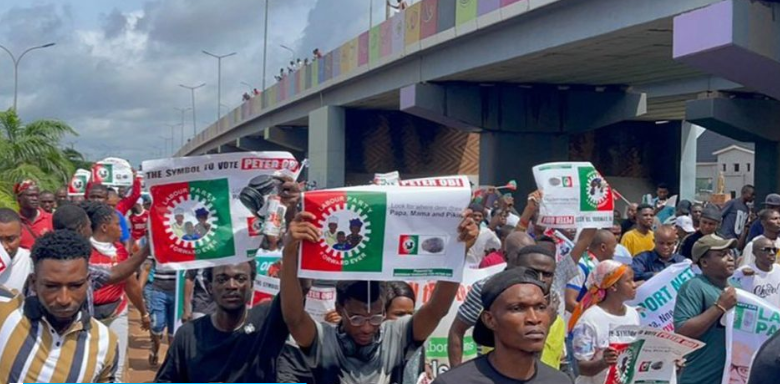
Obi owns no newspaper, TV station, or party apparatus. He built only a crowd. Crowds disperse.
The presidency remains the highest prize. Meanwhile, traditional media owners sharpen pencils, adjust cameras, and prepare to claim it, just as they have since 1937 when Azikiwe launched a newspaper changing West African politics forever