

Honda CEO Toshihiro Mibe admitted Honda “has no chance” matching Chinese EV makers’ speed and automation. This statement reveals Honda’s growing strategic uncertainty amid severe financial strain. The company forecasts an operating loss up to ¥570 billion ($3.7 billion) for FY2026. Additionally, Honda expects total EV-related losses to reach ¥2.5 trillion ($15.7 billion).
In response, Honda sharply reversed its strategy by cancelling three premium North American EVs. These include the flagship Honda ‘0’ SUV and the Acura RSX. The company now prioritises profitability over electrification ambitions. Hybrid and ICE powertrains dominate its near-term roadmap. Moreover, Honda slashed its EV investment budget by 30%. This retreat reflects global EV market fragmentation. U.S. EV sales dropped 27% year-on-year in Q1 2026. Meanwhile, Europe and China continue rapid EV growth.
Automakers face divergent regulations, infrastructure, and consumer demands. Honda’s shift signals fiscal caution and reassesses technology readiness. The challenge now centres on operational speed, scale economics, and innovation capacity. China’s integrated EV ecosystem increasingly dominates these capabilities.
A Crisis of Confidence
When the head of a global automotive giant looks at a competitor’s production line and publicly admits defeat. No doubt, the industry takes notice.
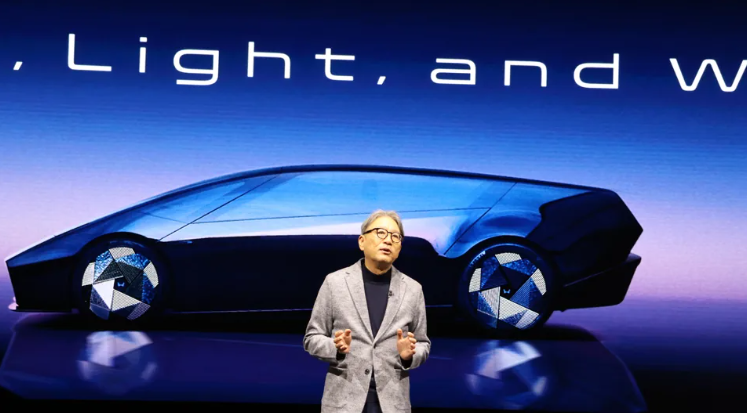
Honda CEO Toshihiro Mibe visited a Chinese electric vehicle plant. He witnessed unmatched speed, efficiency, and automation. This experience deeply impressed the Japanese veteran. Consequently, he told his staff that direct competition is futile. This rare admission signals a shift in the automotive landscape. It highlights China’s growing dominance in EV manufacturing. Furthermore, it raises questions about Honda’s competitive strategy. Industry watchers now anticipate significant changes from Honda. Overall, Mibe’s statement underscores the fierce global EV race.
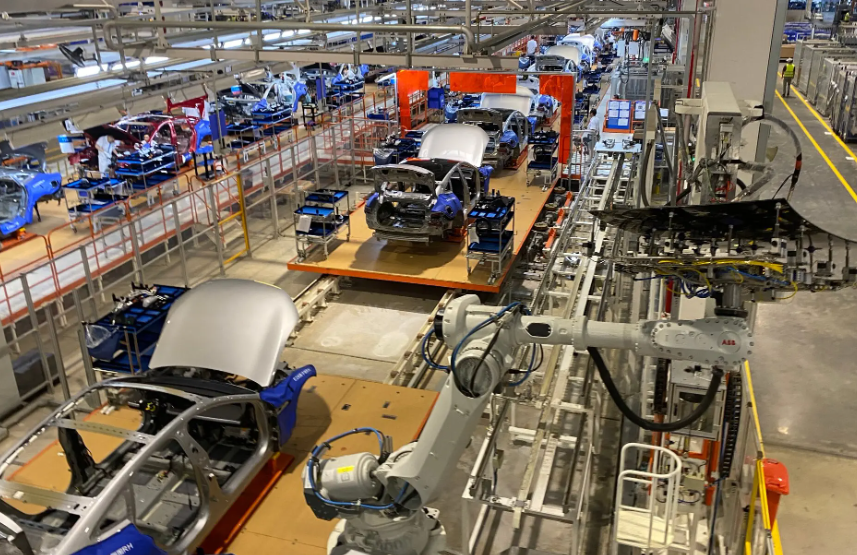
“What I saw was a facility where everything—from parts procurement to logistics management—was fully automated, with almost no humans on the floor,” Mibe said in a March interview with Nikkei Asia. “We have no chance against this.”
The $15.7 Billion Mistake
Mibe’s admission of inferiority is rooted in a rapidly deteriorating financial reality. The company is projecting its first-ever annual net loss since listing in 1957. For the fiscal year ending March 2026, Honda expects an operating loss of up to 570 billion yen (approx. $3.7 billion). This is a dramatic reversal from the 550 billion yen profit it had forecast just months earlier.
The primary culprit is a massive write-down of assets tied to its abandoned EV roadmap. Honda has announced total losses of approximately 2.5 trillion yen ($15.7 billion). This is related to the reassessment of its automobile electrification strategy. In addition, it includes the complete cancellation of three premium EV models slated for North America: the Honda 0 SUV, the Honda 0 saloon, and the Acura RSX. The company is effectively clearing the decks of its future electric lineup to stop the financial bleeding.
The US Policy Hangover
While the alarming rise of Chinese EV manufacturing served as the catalyst. However, many analysts argue the immediate trigger for Honda’s crisis lies in the boardrooms of Washington, D.C. The abrupt elimination of the long-standing $7,500 federal EV tax credit in mid-2025 completely upended the US market’s demand calculus. Unfortunately, this is an environment in which Honda has invested billions to prepare full-scale EV launches.
The numbers are stark. Overall US electric vehicle sales plummeted by 27% year-on-year in the first quarter of 2026. Consequently, leading to the overall volumes dropping to just 216,399 units. This has effectively frozen the market for mass-market EVs, leaving only luxury players like Tesla (which saw its Model Y sales jump 23%) to dominate the shrinking segment with a 54% market share.

Diverging Paths: Honda vs. Toyota
The crisis has highlighted a fascinating divergence in Japanese corporate strategy. While Honda is retreating, its rival Toyota is actually doubling down.
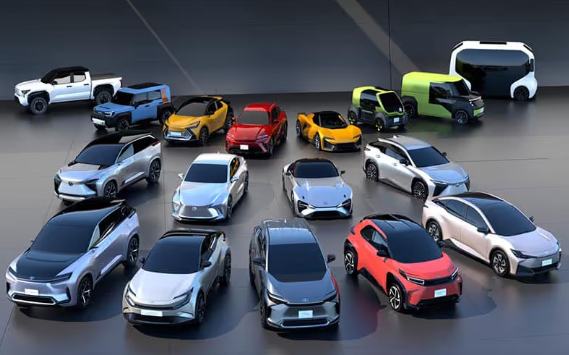
For years, Toyota was mocked by environmentalists and investors for its “slow” approach to full electrification. Rather, they chose championing a “multi-pathway” strategy that included hybrids, hydrogen, and plug-ins. That strategy is now paying off handsomely. While Honda is cancelling five EVs, Toyota is expanding its lineup to four EV models this year, leveraging its hybrid profits to price aggressively.
This difference in approach allowed Toyota to maintain pricing power and supply chain stability, despite the volatile market. Conversely, Honda ate the massive cost of pivoting from a strategy that became unviable overnight. As the US market leans back toward the affordability and convenience of hybrids, Toyota appears to have got it right. It is now obvious they placed the correct bet by not going “all-in” on pure EVs too early.
Europe and China Accelerate
Ironically, Western economies in North America struggle with inflation and political uncertainty over environmental policies. Meanwhile, China and Europe accelerate their push toward an electric vehicle future. Global EV sales reached 4 million units in Q1 2026, showing strong overall growth. However, regional trends reveal significant disparities in the EV market’s performance.
North America experienced a sharp 27% decline in EV sales during this period. Conversely, the European market surged with a 27% increase in the same quarter. The “Rest of the World” category, driven by Chinese exports, grew by 79%. These contrasting trends highlight differing regional priorities and market conditions in the EV industry. The data emphasises the uneven pace of EV adoption across global markets.
For Honda, this creates a nightmare supply chain and engineering dilemma: managing two separate product lines globally. The company announced a new organisational restructuring, effective April 2026, to address this challenge. It integrates electrification and internal combustion engine development teams into a single unit. This move aims to slash costs while improving overall operational efficiency significantly.
However, it also signals a potential shift away from prioritising pure-EV development. Instead, Honda favours “flexible” platforms that support hybrid vehicles. This strategy reflects Honda’s effort to adapt to varied market demands and regulatory environments. Ultimately, the restructuring may reshape Honda’s product development focus and future competitiveness.

A Strategy in Flux
What comes next for the Japanese giant that has lost its way? For now, Honda is focusing on survival. It plans to rely heavily on its legacy of reliable hybrids and internal combustion SUVs. Honda still holds a loyal customer base in both the US and Japan. The company projects total US sales of about 1.5 million units in 2026. This projection is buoyed by strong demand for its hybrid powertrains and affordable passenger cars. Honda’s immediate strategy emphasises stability while navigating industry challenges and market shifts.
However, the company is not abandoning zero emissions entirely. It is looking to emerging markets like India as a testing ground for its next-generation affordable EVs. Furthermore, it is planning to produce a global electric SUV there within the next fiscal year. Hence, the focus is to compete in segments where Chinese automakers have yet to gain a foothold.

Mibe’s confession that Honda “has no chance” may be the brutal honesty the industry needs. By admitting defeat against China’s automated giants, Honda can pivot to a sustainable, hybrid-led model. This shift allows the company to focus on flexibility and long-term survival strategies. The next few years will reveal if this retreat marks the end of Honda’s legacy. Alternatively, it could be a tactical withdrawal before a smarter, stronger comeback. Honda’s future now hinges on its ability to adapt and innovate quickly. This honest admission might ultimately save the company from deeper struggles ahead. The industry will watch closely as Honda navigates this critical turning point.
Sources for this report include the official March 2026 earnings revision statement from Honda Motor Co., Ltd., analysis from EV Magazine, Manufacturing Digital, Nikkei Asia, SlashGear, Carscoops, and S&P Global Mobility.