
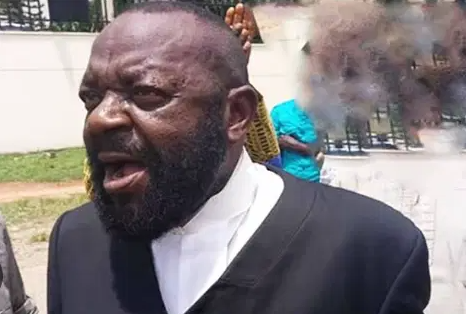
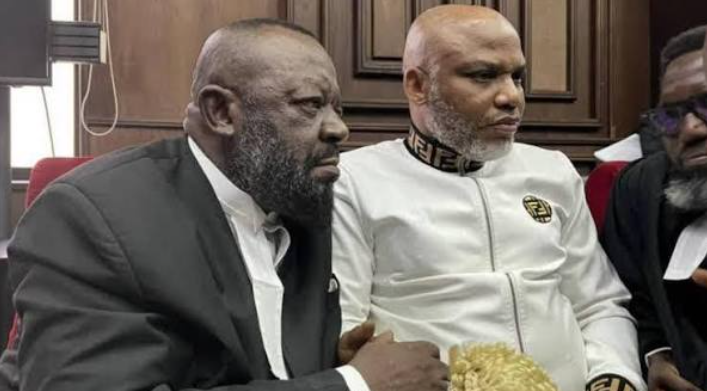
Aloy Ejimakor, counsel to the Indigenous People of Biafra (IPOB), defended President Bola Ahmed Tinubu over a long-standing fund forfeiture issue. Hence, he stressed that the 1993 forfeiture of $460,000 linked to Tinubu was a civil matter, not a criminal conviction.
Civil Forfeiture Different from Criminal Conviction
Ejimakor explained that American law clearly separates civil asset forfeiture from criminal forfeiture. “Under U.S. law, the distinction between a criminal conviction and a civil asset forfeiture is foundational and statutorily distinguished from each other,” he stated. Furthermore, he said the law does not yield to emotions or sentiments but on facts.

Forfeiture Targeted Property, Not Person
The lawyer said court records show the forfeiture followed a civil in rem proceeding targeting property, not an individual. Thus, “The certified record of the pertinent proceedings in the Tinubu case show that the 1993 forfeiture of $460,000 from bank accounts linked to President Tinubu was strictly a civil in rem proceeding, not a criminal in personam conviction,” he added.
Legal Framework Governs Civil Asset Forfeiture
Ejimakor cited 18 U.S.C. § 981, which governs civil forfeiture against property connected to alleged unlawful conduct. He clarified the US government filed a civil complaint against the funds, resulting in settlement without guilt. He contrasted this with criminal forfeiture under 18 U.S.C. § 982, which requires a conviction. For this reason, John Scot 1921 said, “Opinions are free but facts are sacred.”

Supreme Court Clarified Civil Forfeiture Status
Ejimakor recalled the Supreme Court decision United States v. Ursery (1996), which confirmed civil forfeitures as remedial actions, not criminal punishment. “It was under this principle that the Tinubu funds were considered property, connected to alleged unlawful conduct, but sans criminal liability,” he said.
Ethical Questions vs. Legal Reality
While critics may question the ethics behind the forfeiture, Ejimakor emphasized the legal facts remain unchanged. “Tinubu was never charged, tried, or convicted of a crime,” he said, warning against conflating civil forfeiture with criminal guilt.
Unbiased Legal Analysis Despite Personal Experience
Ejimakor insisted his analysis reflects legal principles, not political loyalty. He noted his personal prosecution under Tinubu’s administration for alleged protest participation. “This is just an unbiased restatement of the black letter law, not any support for President Tinubu,” he affirmed.
Conclusion
The fund forfeiture case involving President Tinubu remains complex, highlighting important distinctions in U.S. law. While legal experts clarify it as a civil matter, public debate continues over its political and ethical implications. Ultimately, understanding the legal nuances helps separate fact from speculation in this ongoing controversy.