


Ramzy Ibrahim Abusafiah leads the Palestinian community in Nigeria, and security operatives arrested him. Without a doubt, men who identified themselves as members of the Nigeria Police’s Anti‑Terrorism Squad were the ones who arrested him. However, he left his Abuja residence on Friday under the custody of heavily armed officers.
“They have not told us his offence. They just came to pick him up at his residence in Abuja,” the source said.
Civil Society Demand Unconditional Release
Civil society groups in Nigeria have demanded the immediate release of a Palestinian leader, Ramzy Abu Ibrahim. Ibrahim was recently detained following joint cooperation between Nigerian and Israeli agents. However, the groups believe he is innocent but can only connect his arrest to his activism. According to the groups, they say his detention violates fundamental rights and could drag Nigeria into foreign conflicts. Moreover, Nigeria’s fragile economy and security situation leave the country ill-prepared for such entanglements.
A Call for Solidarity
The coalition of civic groups is urging President Bola Tinubu’s administration to act immediately. Furthermore, they demand that Ibrahim and other detained Palestinians be released unconditionally. Moreover, the group emphasises that advocating for Palestinian rights does not constitute a crime. Therefore, Nigeria must uphold its constitutional principles and resist foreign pressure. Above all, the country’s independence and stability remain paramount.
The Risks of Foreign Entanglements
Nigeria’s security pact with Israel has raised concerns. The detention of Ibrahim and others may be linked to this agreement. Civil society groups warn against being drawn into the Israel-Palestine conflict. Nigeria’s priorities should be its internal security and economic challenges. Foreign entanglements could further destabilise the country.
Upholding Human Rights
The groups stress that detaining Ibrahim and others is an assault on people’s human rights. Nigeria’s constitution and international conventions guarantee these rights. The government must respect and protect its citizens and guests. Harassment and political repression violate these principles and cannot continue. Nigeria should prioritise its commitment to human rights and the rule of law.
Causes of the Hamas-Israeli War
The Hamas-Israeli war stems from deep-rooted historical conflicts between Israelis and Palestinians. Firstly, territorial disputes over land, especially Gaza and the West Bank, fuel ongoing tensions. Additionally, both sides claim Jerusalem as their capital, creating religious and political friction. Furthermore, the lack of a mutually accepted peace agreement intensifies hostilities. Consequently, violence erupts periodically, disrupting efforts toward lasting peace.
Secondly, political factors play a significant role in sparking the conflict. Hamas, governing Gaza, refuses to recognise Israel’s legitimacy, leading to frequent clashes. Meanwhile, Israeli security concerns prompt strict measures, which Palestinians view as oppression. Moreover, external influences from regional powers exacerbate the situation. Thus, political mistrust and power struggles continue to drive the war.

Ramzy Ibrahim Abusafiah
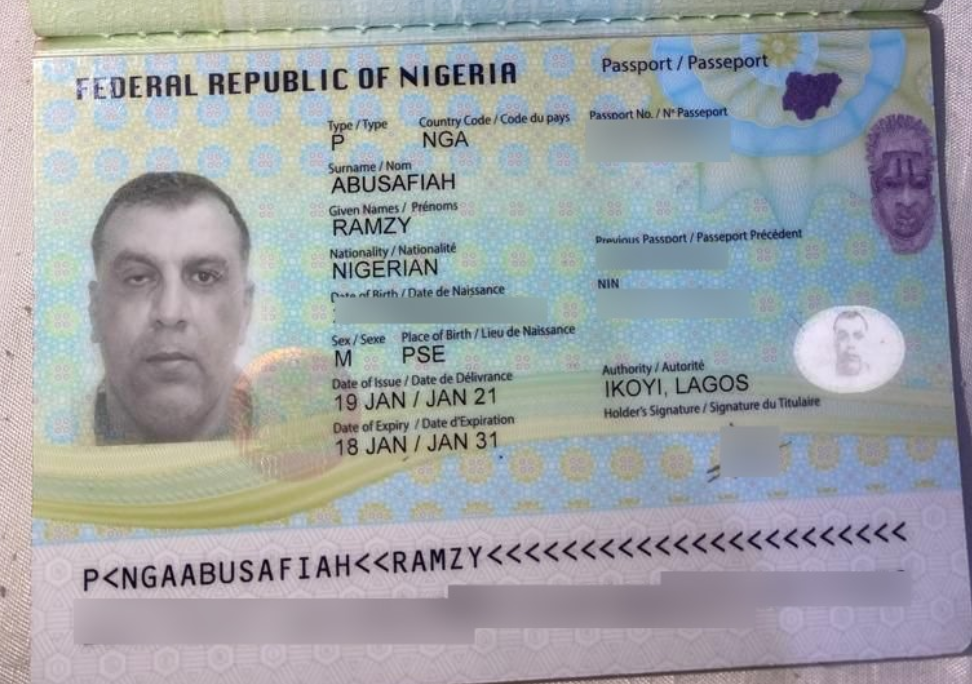
Ramzy Ibrahim Abusafiah, born on August 23, 1973, holds dual Palestinian-Nigerian citizenship. He has resided in Nigeria for nearly five decades and possesses a Nigerian passport.
Prior to his arrest, Abusafiah actively advocated for peace in the Israeli–Palestinian conflict, focusing on issues such as the occupation of Gaza and the annexation of the West Bank.
A Path to Peace
The civil society groups propose a “Two-Nation State” solution to resolve the Israel-Palestine conflict. This approach could achieve a just and lasting peace. Nigeria should support a peaceful resolution while prioritising its national interests. The country can contribute to international efforts without compromising its sovereignty. Diplomacy and dialogue play key roles in resolving the conflict.
Conclusion
The detention of Ramzy Abu Ibrahim and other Palestinians has sparked widespread concern. Civil society groups are calling for their release and for Nigeria to prioritise its national interests. Furthermore, the country’s fragile economy and security situation demand caution. Nigeria should uphold its constitutional principles and human rights commitments. By doing so, the country can maintain its stability and contribute to international peace efforts. For this reason, the country should join forces with other well-meaning nations to broker a true peace treaty that will be acceptable to all.