
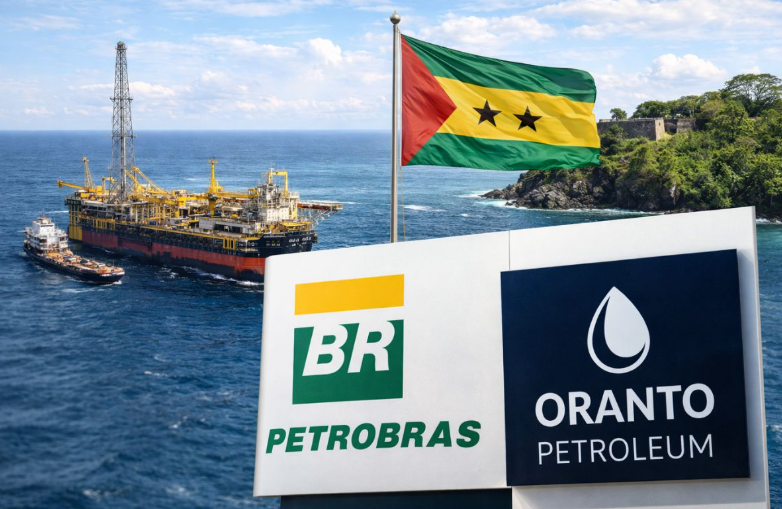
Petrobras, Brazil’s state-owned oil giant, announced a bold move for African energy on April 17, 2026. The company signed a definitive agreement to acquire a 75% operating stake in Block 3. This offshore exploration concession lies in São Tomé and Príncipe, a Gulf of Guinea nation. Petrobras bought the stake from Nigerian billionaire Arthur Eze’s Oranto Petroleum.
Petrobras made this acquisition the latest and most significant in its strategic expansion. It aims to secure a foothold in regions geologically similar to Brazil’s pre-salt basins. The deal signals Petrobras’s renewed appetite for frontier exploration. It also highlights Oranto Petroleum’s strategic pivot away from early-stage licence trading.
Oranto Petroleum, led by Nigerian billionaire Arthur Eze, has historically acquired and traded such licenses.

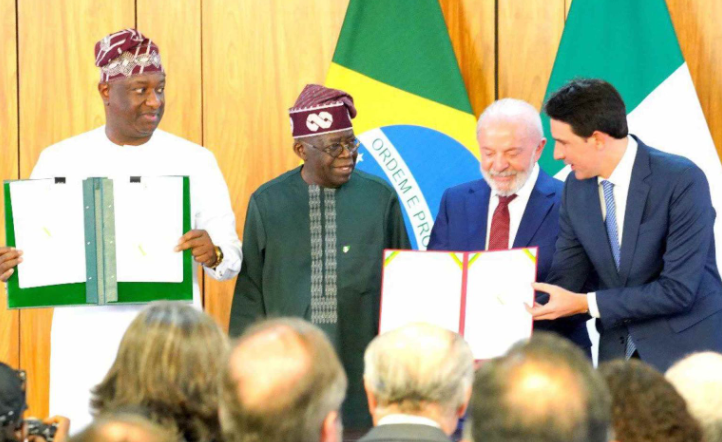
President Tinubu’s State Visit To Brasil
No doubt, the deal was made possible as a result of the visit of President Bola Tinubu to Brazil on August 25, 2026. Furthermore, during that state visit, President Bola Tinubu welcomed Petrobras’s imminent return to Nigeria, describing it as a milestone that would “reignite robust economic cooperation” in the oil and gas sector between both nations.
This article breaks down the deal’s structure, its strategic importance for both companies, and the broader context of Petrobras’s return to the African continent.
Deal Structure and Stakeholders
The terms of the transaction significantly reshape the ownership structure of the deepwater block. Currently, Oranto operates the block with a commanding 90% stake, while the National Petroleum Agency of São Tomé and Príncipe (ANP-STP) holds the remaining 10%.
Upon completion, which is subject to approvals by the government and regulatory authorities in São Tomé and Príncipe. The new consortium will be led by Petrobras as the operator, holding a 75% interest. However, Oranto will see its stake reduced to 15%, while ANP-STP will retain its 10% carried interest. Although the financial terms of the deal have not been publicly disclosed.
Petrobras’s Strategic Return to Africa
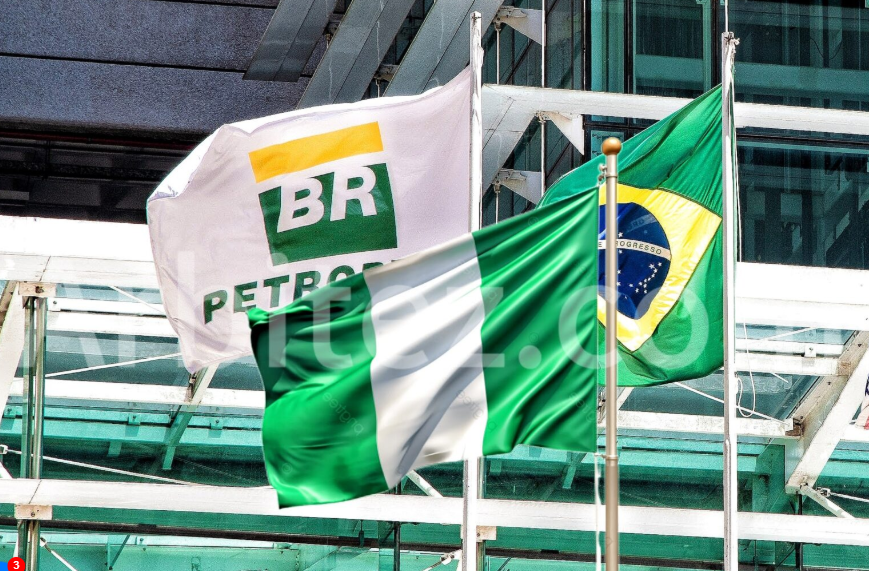
For Petrobras, this move is a cornerstone of its 2026–2030 business plan, which prioritises diversifying its portfolio. In addition to replenishing its oil and gas reserves through frontier exploration. Furthermore, the company has earmarked approximately $1.3 billion for international exploration over the next five years. Invariably, there is a focus on assets that mirror the geological success of Brazil’s pre-salt provinces.
Petrobras launched this strategy in 2024 to re-engage with Africa deliberately. The company paused African operations earlier due to the Operation Car Wash scandal. Operation Car Wash exposed corruption in the early 2010s and triggered Petrobras’s retreat. Petrobras resumed continental activities officially in 2024 after its strategic review.
Since 2024, Petrobras has aggressively expanded its African portfolio through targeted acquisitions.
São Tomé and Príncipe: The company acquired Block 3, adding to its existing stakes in Blocks 10, 13, 11, and 4. Petrobras holds 45% in Blocks 10 and 13, 25% in Block 11, and 27.5% in Block 4, gained in September 2025 with a Shell-led consortium.
Namibia: Petrobras acquired a 42.5% stake in an offshore block in Namibia’s Orange Basin with TotalEnergies.
South Africa: The company holds a 10% interest in the Deep Western Orange Basin block.
The Exclusive Economic Zone (EEZ) of São Tomé and Príncipe, where these blocks are located, spans about 160,000km². It is considered a frontier region south of the Niger Delta and west of the Gabon salt basin. Moreover, it has regional seismic data indicating geological structures similar to those in neighbouring hydrocarbon-producing basins.
Oranto’s Strategy and Recent Challenges
For Oranto Petroleum, the sale exemplifies its business model: acquire early-stage exploration licences with high potential. Then, it brings in major international partners with capital and technical expertise to develop the licenses.
The transaction occurs as the company, founded by Nigerian multi-millionaire Prince Arthur Eze in 1991, faces growing headwinds. African governments tighten oversight on oil licences and demand performance. They pressure companies with a history of stalled exploration.
Senegal: In September 2025, Senegal revoked Oranto’s licence for the Cayar Offshore Shallow block. The government cited repeated failures to meet financial and contractual obligations since 2008.
Equatorial Guinea: An affiliate of Atlas Oranto lost its 27% stake in Block I after a funding dispute with Chevron. Hence, the government transferred the stake to state-owned GEPetrol.
Liberia: The company signed production-sharing contracts for four offshore blocks in September 2025. Lawmakers and civil groups scrutinise the deals over transparency and financial capacity concerns.
These challenges highlight the increasing risks for minority partners in capital-intensive projects and the broader shift toward stricter compliance in the African energy sector.
Prince Arthur Eze: The Man Behind Oranto
Prince Arthur Eze, often referred to by his traditional title “Ozoigbondu,” is a prominent figure in Nigerian business and politics. Born in 1948 into a royal family in Anambra State, he founded Atlas Oranto Petroleum in 1991. Importantly, the company has since grown into one of Africa’s largest privately held oil exploration companies. Thus, holding over 22 licences across the continent. With an estimated net worth of $5.8 billion, he is consistently ranked among Africa’s wealthiest individuals.
Outlook: A Frontier Bet with High Stakes
The São Tomé block remains an undrilled, high-risk, high-upside prospect in a frontier basin. Conversely, it is a risky venture, as no commercial discoveries have yet been made. However, for Petrobras, the deal is a calculated gamble to secure its long-term future. Hence, their target is a future beyond 2030 as its mature domestic fields begin to decline.
For Oranto, the transaction injects much-needed financial flexibility and lets it keep a carried interest. For this reason, a global supermajor de-risked the high-potential asset. The coming months will prove critical as regulators review the deal and Petrobras formulates its West African deepwater exploration plan.
This report was compiled from the April 17, 2026 announcement by Petrobras, supporting documents from the company’s 2026–2030 business plan, and industry analysis from OilPrice.com, Ecofin Agency, and Offshore Technology.