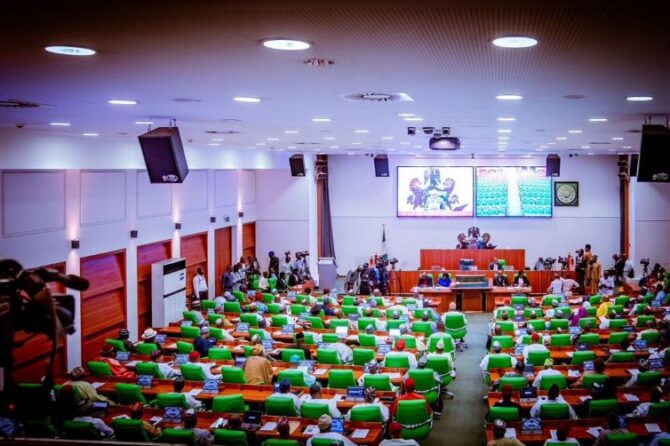

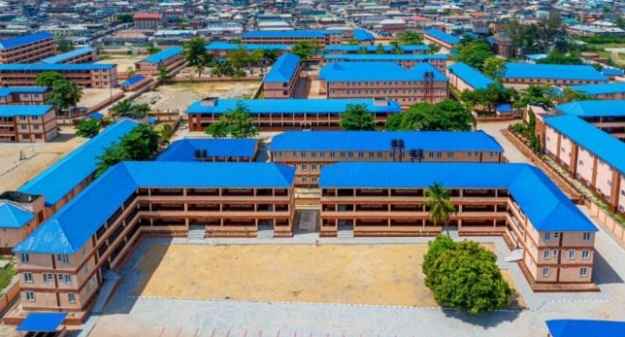
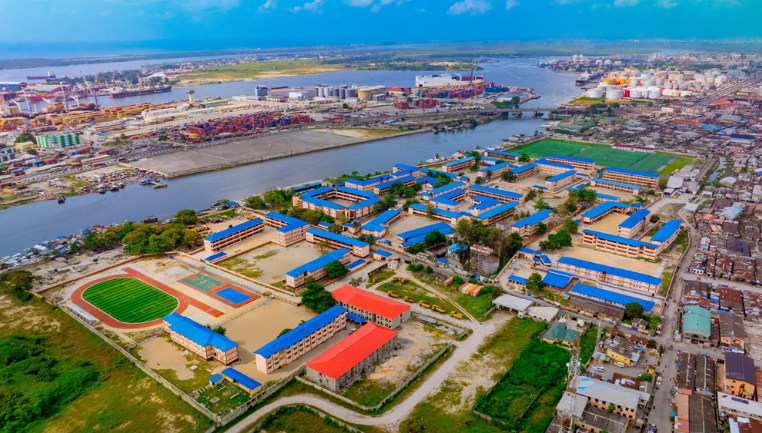
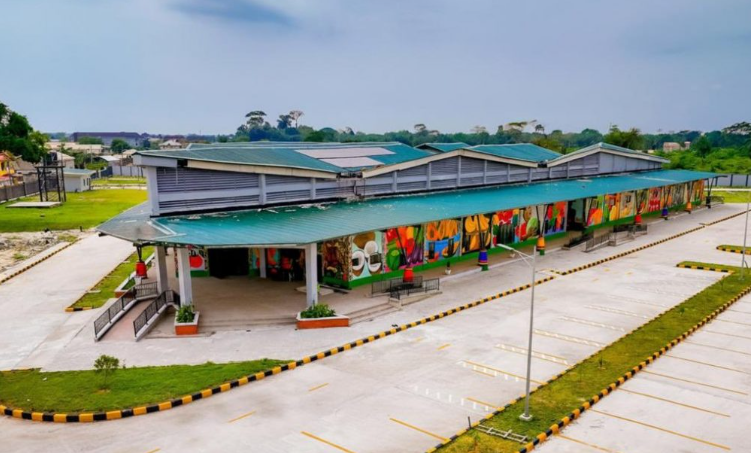
Ajegunle, a sprawling and resilient Lagos community, now hosts the envy of all schools. People hail the Tolu group of schools as the largest cluster of schools in West Africa. On April 9, 2026, President Bola Tinubu, through Senate President Godswill Akpabio, officially opened the newly regenerated Tolu Schools Complex. The facility, spanning 11.73 hectares, houses 36 public schools, including 5 primary and 15 junior secondary schools. Additionally, 16 senior secondary schools accommodate over 21,000 students.
This achievement, however, is not just a story of government infrastructure. A single act of corporate responsibility sparked a 15-year cascade of systemic change. This initiative catalysed continuous reforms across policies, practices, and industry standards. Consequently, transforming a national embarrassment into a benchmark for public education.
The Spark:
A Shocking Discovery in 2011
In May 2011, Emeka Oparah, then the Head of Corporate Communications for Airtel Nigeria, visited the Tolu Complex. What he found at Oremeji Primary School 2 was alarming. Children were seated on the bare ground under a tree, learning from a teacher. Unfortunately, the teacher used the cracked wall of a collapsed building as a blackboard.
Shortly after acquiring Zain’s operations, the newly established Airtel Nigeria launched its “Adopt-a-School” initiative. Partnering with the Lagos State Government, the company chose Oremeji as its pilot project. In just six months, Airtel delivered a modern six-classroom block. Additionally, the classroom features include a head teacher’s office, sanitation facilities, a borehole, and electricity. The company also provided uniforms, books, and school bags to the students.

The Ripple Effect:
Government Scales the Vision
The initial project had a catalytic effect. It reportedly drew the attention of the then-First Lady of Lagos, Mrs Folasade Fashola. She was so impressed; hence, she advocated for a wider rehabilitation of the complex. Over the subsequent decade, this private seed grew into a major public works programme under Governor Babajide Sanwo-Olu. What started as a single corporate gift has transformed into a “school city”.
Governor Sanwo-Olu noted the historical significance of the project, which originated in 1981. The schools were initiated under the mass education policy of the late Alhaji Lateef Jakande. However, after years of neglect, the Sanwo-Olu administration acted with precision. He reworked the schools through the Special Committee on Rehabilitation of Public Schools (SCRPS) and delivered a comprehensive overhaul.

Beyond Classrooms:
A 21st-Century Learning Ecosystem
The new Tolu Schools Complex is far more than just repainted walls. It has been designed as an integrated educational hub for the modern era. According to the Lagos State Government and the SCRPS, the complex now boasts the following:
We constructed 12 new classroom blocks and rehabilitated 24 existing buildings. A state-of-the-art ICT and Robotics centre now fosters digital fluency. A four-storey vocational centre provides workshops to bridge theory and practical competence. The central laboratory complex hosts dedicated Physics, Chemistry, and Biology labs. Each lab accommodates 200 students. Finally, the site includes 19 mini-football pitches, a fire station, and a health centre.
The President’s Commendation
President Tinubu, who was represented at the event, praised the project’s magnitude, calling it “exceptional and remarkable”. Additionally, he highlighted that the facility aligns with the federal government’s Renewed Hope Agenda. He emphasised that education must serve as a primary driver of economic growth and national development. Importantly, he asserted that it should not be merely a social service.
Furthermore, Senator Akpabio, standing in for the president, said the facility shows the power of collaboration.
Governor Sanwo-Olu urged students and staff to protect the infrastructure as a legacy for future generations.
A Model for Replication
Emeka Oparah, Group Vice President for Corporate Communications at Airtel Africa, first visited the site in despair.
He now sees the Tolu Complex as a symbol of renewal—not neglect. Nevertheless, it has become a case study in what is possible when a modest private intervention inspires large-scale public action.

The Airtel Africa Foundation is expanding its model to adopt over 100 schools across 14 African countries. Within the next 12 months, it will adopt 10 additional schools in Nigeria.
The Airtel Africa Foundation and government partners transformed the Tolu Schools Complex completely. A school rose from a dilapidated cluster into West Africa’s largest “school city”.
For this reason, this achievement proves that strategic private-sector–government partnerships can reshape educational futures for millions of children.