

Introduction
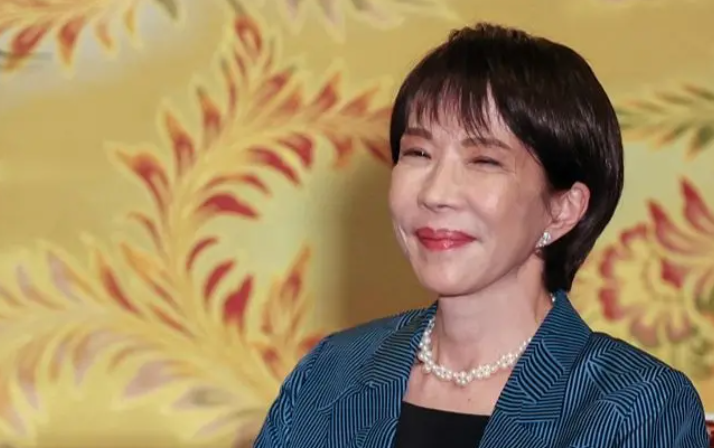
On October 21, 2025, Sanae Takaichi made history by becoming Japan’s first female prime minister. Consequently, her rise to power has captured global attention. Hence, this news bulletin shall explore her political journey, activism, mentors, and the controversy surrounding her cabinet choices.
Early Life and Education
Sanae Takaichi was born in 1961 and raised in Yamatokōriyama, Nara Prefecture, Japan. She grew up in a dual-income, middle-class household. Furthermore, her father, Daikyū Takaichi (1934–2013), worked for an automotive firm affiliated with Toyota. Her mother, Kazuko Takaichi (1932–2018), served in the Nara Prefectural Police. During her childhood, her parents taught her about the Imperial Rescript on Education. She memorised the entire text.
The Imperial Rescript on Education, issued by Emperor Meiji in 1890, emphasised loyalty to the emperor, filial piety, and moral virtues. It aimed to instill these values in Japanese citizens, fostering a sense of national unity and duty.
Sanae demonstrated academic excellence, courage and some sort of uncanny determination from a young age. Takaichi earned a degree in economics from the prestigious University of Tokyo. This strong educational background helped her understand Japan’s complex economic and political landscape. Her education laid the foundation for her future career in politics.

Political Career
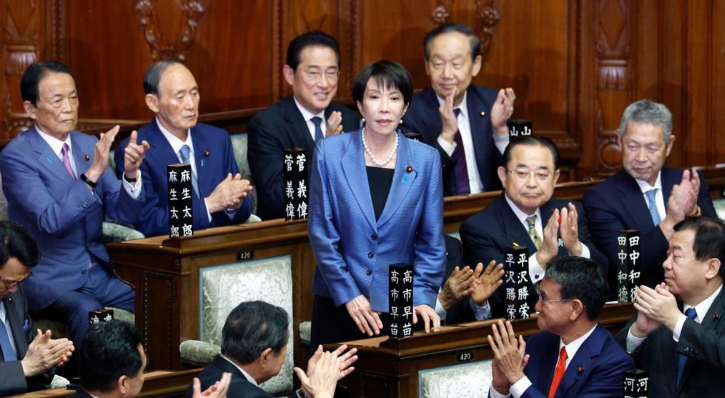
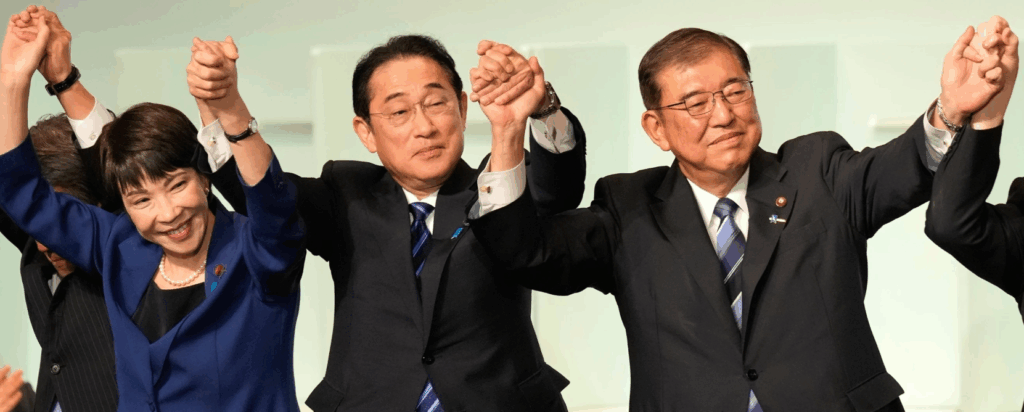
Takaichi entered politics in 1993 when she won a seat in Japan’s House of Representatives, where she gained political exposure. Furthermore, she steadily gained influence within the Liberal Democratic Party (LDP), where she advanced the cause of the party. Between 2012 and 2014, she served as Minister of Internal Affairs and Communications. Importantly, this role gave her valuable experience managing government operations and communication policies. After years of dedication, her influence and popularity grew to the extent she won the LDP presidential election in 2025. Following Shigeru Ishiba’s resignation, she became the first woman to lead Japan’s ruling party, a feat in Japanese history. Thus, this victory paved the way for her appointment as prime minister, marking a historic milestone for Japan.
Activism and Ideology
Takaichi’s activism focuses on strengthening Japan’s national security and revitalising its ailing economy, especially with Trump’s global tariffs imposition. In the same fashion, she strongly supports revising Japan’s pacifist constitution to allow for a more robust military presence. She advocates policies that promote economic growth, inspired by “Abenomics”, the economic strategies introduced by former Prime Minister Shinzo Abe. Takaichi frequently emphasises the importance of preserving traditional Japanese values while fostering innovation. Consequently, her conservative views resonate with a large segment of Japan’s population, particularly those concerned about growing regional threats. In addition, she calls for a proactive stance against geopolitical challenges posed by neighbouring countries.

Mentorship and Influences
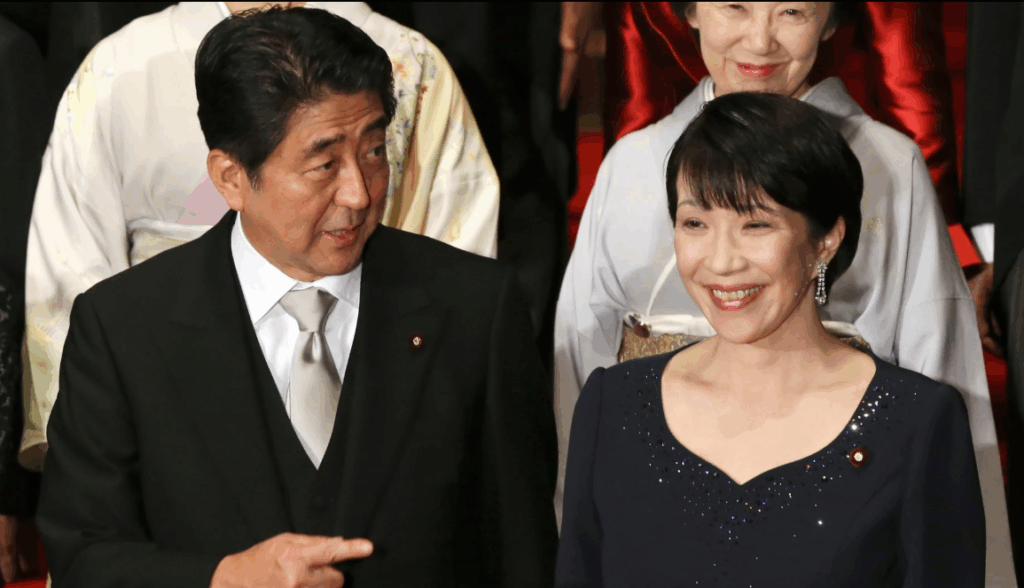
Sanae Takaichi credits former Prime Minister Shinzo Abe and former British leader Margaret Thatcher as key mentors and ideological influencers. Abe’s and Thatcher’s long tenures and policy successes shaped her views on governance and leadership. In fact, she openly admires their approach to economic reform and national defence. Nevertheless, her shared vision for Abe’s policies includes strengthening Japan’s global position and empowering its military capabilities. Takaichi has often consulted with Abe and his close allies during her political rise. This mentorship helped her craft policies that appeal to conservative voters and party members.
Cabinet Appointments and Gender Representation
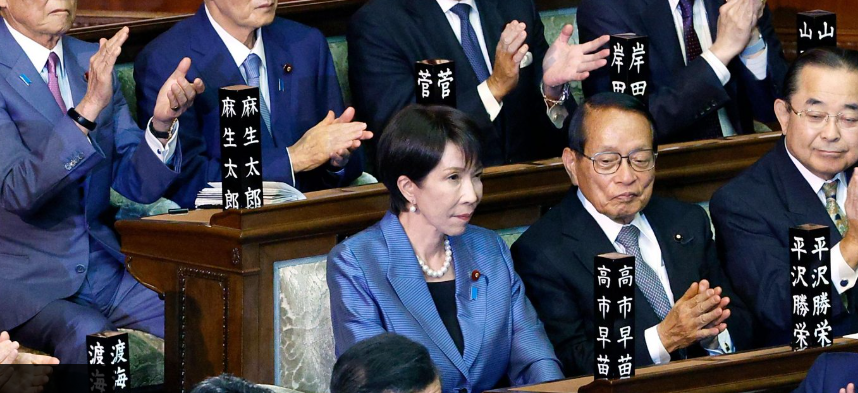
After assuming office, Takaichi appointed a cabinet consisting of only two women out of twenty ministers. This decision sparked controversy and criticism across Japan and abroad. Many expected her to use her historic role to advance gender equality in politics. Critics argue that her cabinet choices do not reflect a genuine commitment to increasing female representation in leadership. Supporters claim she selected ministers based on experience and loyalty rather than gender. Some observers suggest that Japan’s deeply entrenched political culture limits rapid progress on gender diversity. Nonetheless, the appointment of only two women has reignited debates about the pace of female empowerment in Japanese government.
Public Response and Political Challenges
The public response to Takaichi’s leadership has been mixed with both praises and knocks. While some praise her for breaking the glass ceiling and providing strong leadership. Others express disappointment over the lack of gender diversity in her cabinet. Opposition parties have capitalised on this issue to challenge her administration. Additionally, Takaichi faces the ongoing challenge of addressing economic stagnation and regional security threats. Balancing conservative policies with the demands of a modern electorate will test her political skills in the coming years.

Personal Life
Sanae Takaichi married Taku Yamamoto, a fellow House of Representatives member, in 2004. They have no children together. However, Takaichi adopted Yamamoto’s three children from his previous marriage. In July 2017, they divorced due to differing political views and aspirations. Later, they remarried in December 2021. Through her stepchildren, she has four grandchildren.
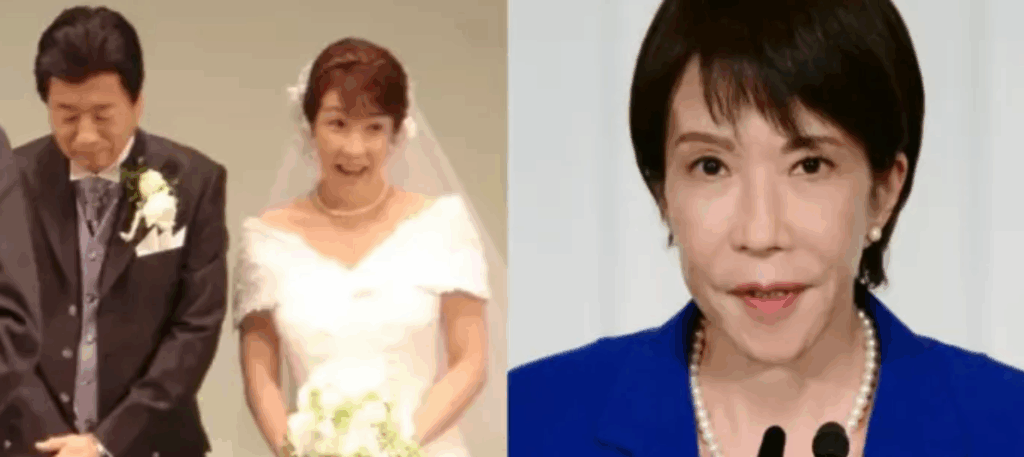
After her surgery for a gynaecological disease, Takaichi struggled to conceive. Consequently, she gave up on having children. In 2007, she expressed a wish for society to welcome infertile women.
During her first marriage, she legally took her husband’s family name. Nevertheless, she continued using her maiden name publicly. Upon their remarriage, Yamamoto took the Takaichi name to fulfil legal naming requirements.

In 2025, Yamamoto suffered a cerebral infarction. This left the right side of his body paralysed. Takaichi now serves as his carer.
Takaichi enjoys horse racing and supports the Japan Racing Association (JRA). She also loves heavy metal and Japanese rock music. For example, she listens to Demon Kakka, B’z, and X Japan. Moreover, she supports sports teams like Gamba Osaka and Hanshin Tigers.

In her youth, Takaichi played drums and piano. She also loved motorcycles and once owned a Kawasaki Z400. Additionally, she enjoys scuba diving and cars. During her early parliamentary years, she owned a 1991 Toyota Supra A70 2.5GT Twin-Turbo Limited. She drove this car to work for over 20 years. This Supra replaced her Toyota Supra Celica XX. Today, the car rests in a Toyota dealership museum in Nara.

Conclusion
Sanae Takaichi’s appointment as Japan’s first female prime minister marks a historic and symbolic achievement. Her political career, activism, and mentorship reflect a clear vision for Japan’s future. However, her cabinet’s limited female representation raises important questions about gender equality progress. As she leads Japan through complex domestic and international challenges, Takaichi’s tenure will shape the country’s political landscape. Observers worldwide will watch closely to see how she navigates these issues and defines her legacy.