
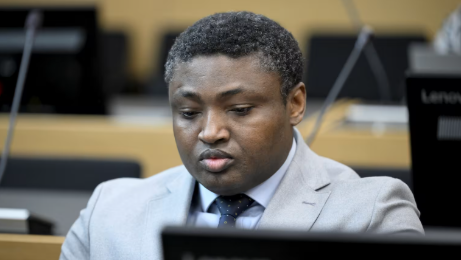
The Päijät-Häme District Court in Finland sentenced Simon Ekpa, a Nigerian-born Finnish citizen, to six years in prison for terrorism-related crimes and other offences. Ekpa, a former municipal politician from Lahti, committed multiple offences, including participating in the activities of a terrorist organisation, inciting crimes for terrorist purposes, committing aggravated tax fraud, and violating the Lawyers Act. The court ordered Ekpa to remain in custody. This verdict marks a significant milestone in the fight against terrorism and highlights how seriously Finnish courts treat such offences. Ekpa’s conviction results from his involvement in promoting the independence of the Biafra region in southeastern Nigeria through illegal means.
Background to the Case
Ekpa’s problems started when he joined the Biafran separatist movement and used social media to rise to a position of political influence. He played a major part in a major Nigerian separatist movement by exploiting its misunderstanding. According to the court, Ekpa collaborated with others to establish and grow the separatist movement into a more formal organization. The movement gave rise to armed groups, which the court categorized as terrorist organizations. The court decided that Ekpa’s activities threatened stability and national security.

Nigerian Government Petition
President Bola Tinubu’s government petitioned Finland’s government regarding Simon Ekpa. The Nigerian government urged Finland to take action against Ekpa’s activities, which were linked to violence and instability in southeastern Nigeria. This diplomatic pressure led to Ekpa’s arrest by Finnish authorities in November 2024. The Finnish National Bureau of Investigation detained him on charges of inciting terrorism and promoting violence. The Nigerian Ministry of Foreign Affairs confirmed the arrest, describing it as a significant development in addressing the activities of the Indigenous People of Biafra (IPOB) and their impact on national security.
The Trial and Verdict
The trial took place over 12 sessions between May 30 and June 25, 2025, with a panel of three judges unanimously delivering the verdict. Ekpa denied all the charges against him, but the court found him guilty based on the evidence presented. The prosecution argued that Ekpa used his public platforms and writings to encourage violent activities linked to the Biafran separatist movement in Nigeria. The severity of Ekpa’s actions and the impact they had on the region influenced the court’s decision. Ekpa’s conviction warns others who might seek to engage in similar activities.

Implications of the Conviction
Simon Ekpa’s conviction has significant implications for the Biafran separatist movement and for Finland’s approach to terrorism-related crimes. The case highlights the importance of international cooperation in addressing transnational terrorism and online incitement. The court found that Ekpa promoted violence and instability in the region, and his conviction sends a strong message about the consequences of such behavior. The Finnish authorities have demonstrated their commitment to tackling terrorism and ensuring national security. This case will likely influence similar cases in the future.
Ekpa’s Role in the Separatist Movement
Ekpa played a significant role in the Biafran separatist movement, and his actions contributed to the violence and instability in the region. He used social media to spread separatist propaganda and encourage violence, and he supplied armed groups with weapons, explosives, and ammunition. The court based its decision on the evidence presented, and Ekpa’s conviction marks a significant victory for the Finnish authorities in their fight against terrorism. The case highlights the importance of monitoring and addressing online activity that promotes violence and instability.
Short Biography of Simon Ekpa
Simon Ekpa is a Nigerian-Finnish political activist and lawyer known for his strong advocacy of the Biafran separatist movement. Consequently, he actively promotes the cause of Biafra’s independence through social media platforms, public speeches, and organised protests. For this reason, Ekpa founded multiple organisations to support human rights and the political autonomy of the Biafran people. Furthermore, he uses his legal background to challenge policies and raise awareness about the region’s struggles. Ekpa’s activism has sparked both support and controversy, drawing attention from international communities and governments.
Nigerian Born
According to records, Ekpa was born in Nigeria before moving to Finland to pursue higher education. In addition, he was able to build a career in law which emboldened his activism. He studied law at a Finnish university, where he developed a keen interest in international human rights issues. After completing his education, Ekpa began working as a lawyer, focusing on cases involving civil rights and social justice. His legal career provided him with tools to advocate effectively for marginalised communities. Ekpa’s dual identity as Nigerian and Finnish allows him to bridge diverse perspectives in his activism.
Biafran Separatist
Ekpa’s leadership in the Biafran separatist movement involves organising rallies, delivering speeches, and mobilising supporters globally. Furthermore, he uses various media platforms to disseminate negative propaganda to pollute public opinion. Ekpa initially emphasises non-violent resistance while condemning actions that escalate conflict. However, his tactics changed as he personally sponsored and bought military weapons for the cause, as cited by the court. Unfortunately, his approach seeks to achieve political change by resorting to violence and the use of negative rhetoric to incite.

Activism
According to his profile on his activism, which has been viewed as extreme in both words and actions. Based on this, Ekpa has faced significant challenges, including legal battles and political opposition. Nigerian authorities accuse him of inciting unrest, leading to heightened tensions between him and the government. Despite these obstacles, Ekpa remains committed to his cause and continues to speak out. His determination inspires many supporters who believe in Biafra’s right to self-determination. However, Ekpa’s resilience highlights the complexities of political activism in contested regions.
Humanitarian Efforts
Ekpa’s influence extends beyond activism into humanitarian efforts, where he supports displaced persons and victims of conflict. Furthermore, he collaborates with international organisations to provide aid and raise awareness about humanitarian crises. Additionally, Ekpa also organises educational programmes to inform people about their rights and political options. Conversely, his work aims to empower communities affected by violence and political instability. Through these efforts, Ekpa seeks to create lasting positive change for the Biafran people.
Struggle For Autonomy
First and foremost, Simon Ekpa represents a dynamic figure in contemporary political activism, blending legal expertise with passionate advocacy. Unfortunately, his unbridled ambition to lead his Biafran people has made him change into a narrow-minded person. Without a doubt, the quest to lead Biafra has escalated into personality clashes of superiority with Nnamdi Kanu. Subsequently leading to the factionalisation of the group, of which his own faction became violent with negative propaganda and acts of criminality. Unquestionably, both Nnamdi and Ekpa’s factions operate more like a cult group with many hardened people within their networks. However, his story exemplifies the power of committed individuals to influence political landscapes if the non-violent approach had been sustained.
Conclusion
In conclusion, Simon Ekpa’s conviction marks a significant milestone in the fight against terrorism. The case highlights the importance of international cooperation and the need for authorities to take a strong stance against terrorism-related crimes. Authorities deemed Ekpa’s actions a threat to national security and stability, and his conviction sends a strong message about the consequences of such behaviour. The Finnish authorities have demonstrated their commitment to tackling terrorism, and this case will likely influence similar cases in the future.