
World Bank Projects 22.1% Inflation Rate for Nigeria in 2025 Amid Economic Growth
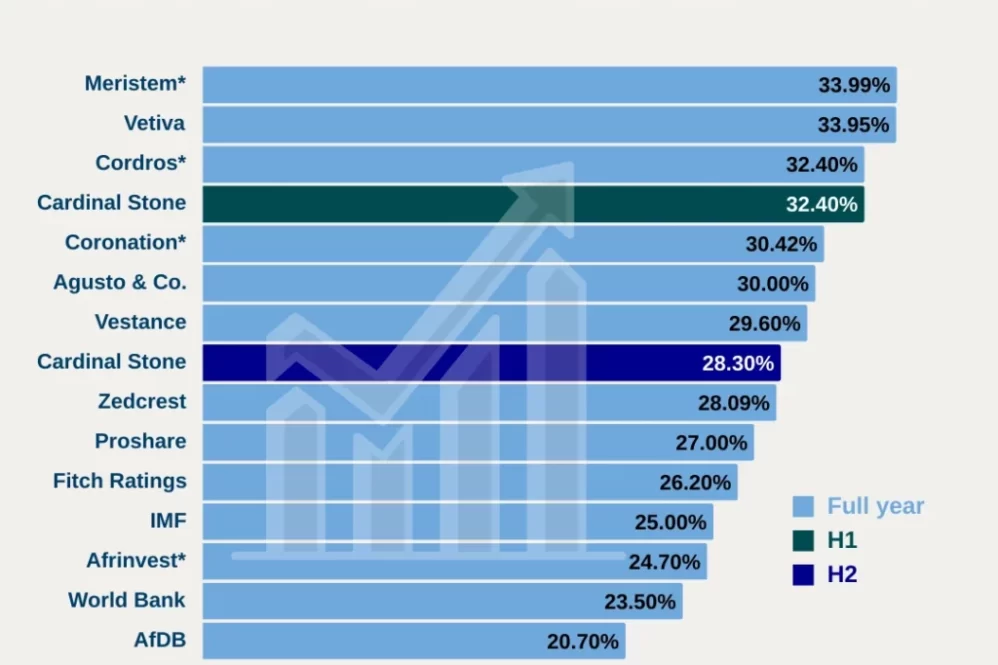
Abuja, May 12, 2025 – The World Bank has projected Nigeria’s inflation rate to average 22.1% in 2025, reflecting a gradual easing of price pressures as the Central Bank of Nigeria (CBN) maintains a tight monetary policy stance. This forecast was disclosed during the launch of the latest Nigeria Development Update (NDU) report titled “Building Momentum for Inclusive Growth.”
Inflation Outlook and Monetary Policy
The World Bank noted that while inflation in Nigeria remains high and persistent, recent monetary tightening by the CBN is beginning to anchor inflation expectations and restore confidence in macroeconomic management. The report highlights that inflationary pressures have been driven by the removal of fuel subsidies, exchange rate unification, high logistics and energy costs, and disruptions in food supply chains.
“Inflation has remained high and sticky but is expected to fall to an annual average of 22.1% in 2025, as a sustained tight stance firmly establishes monetary policy credibility and dampens inflationary expectations,” the report stated.
Economic Growth and Fiscal Improvements
Despite elevated inflation, Nigeria’s economy showed strong momentum in 2024, growing by 4.6% year-on-year in the fourth quarter-the fastest growth in nearly a decade. Full-year growth reached 3.4%, supported by improved fiscal management, increased government revenue, and foreign exchange reforms.
The World Bank projects Nigeria’s overall economic growth at 3.6% for 2025, buoyed by a unified and market-reflective exchange rate that has allowed the CBN to rebuild official reserves to over $37 billion. Government revenue increased significantly due to the removal of foreign exchange subsidies, enhanced tax collection, and rising remittances, contributing to a reduced fiscal deficit estimated at 3% of GDP in 2024.
Challenges Ahead
Alex Sienaert, the World Bank’s lead economist for Nigeria, cautioned that inflation remains a major challenge for the country’s economic stability and the welfare of its citizens. He emphasized the importance of maintaining disciplined fiscal policies and a stringent monetary stance to sustain the downward inflation trend.
Recent Inflation Trends
Data from Nigeria’s National Bureau of Statistics shows inflation slightly rose to 24.23% in March 2025 from 23.18% in February, with food inflation-the largest component-easing to 21.79%. Core inflation, excluding volatile food and energy prices, increased to 24.43%. Monthly consumer prices rose by 3.9% in March, accelerating from 2.04% in February.
Additional Information: Detailed Context and Analysis
The World Bank projects Nigeria’s inflation rate to average 22.1% in 2025, reflecting a gradual easing of price pressures as the Central Bank of Nigeria (CBN) maintains a tight monetary policy stance aimed at anchoring inflation expectations and restoring confidence in macroeconomic management. This projection was disclosed during the launch of the latest Nigeria Development Update (NDU) report titled “Building Momentum for Inclusive Growth” in Abuja.
Nigeria’s inflation has remained high and sticky, driven by factors such as the removal of fuel subsidies, exchange rate unification, high logistics and energy costs, and disruptions in food supply chains. However, recent monetary tightening by the CBN is beginning to slow the momentum of inflation.
Despite elevated inflation, Nigeria’s economy showed strong momentum in 2024, growing by 4.6% year-on-year in the fourth quarter-the fastest growth in nearly a decade-and achieving a full-year growth of 3.4%, supported by improved fiscal management, increased government revenue, and foreign exchange reforms. The World Bank forecasts economic growth of 3.6% for 2025, driven by a unified and market-reflective exchange rate regime that has enabled the CBN to rebuild official reserves to over $37 billion.
The World Bank also highlighted that government revenue increased significantly due to the removal of foreign exchange subsidies, enhanced tax collection, and rising remittances, contributing to a reduced fiscal deficit estimated at 3% of GDP in 2024.
However, inflation remains a major challenge. Data from Nigeria’s National Bureau of Statistics shows that inflation slightly rose to 24.23% in March 2025 from 23.18% in February, with food inflation easing to 21.79% and core inflation increasing to 24.43%. Monthly consumer prices rose by 3.9% in March, accelerating from 2.04% in February.
The World Bank emphasizes the importance of maintaining disciplined fiscal policies and a stringent monetary stance to sustain the downward inflation trend and support inclusive economic growth.