

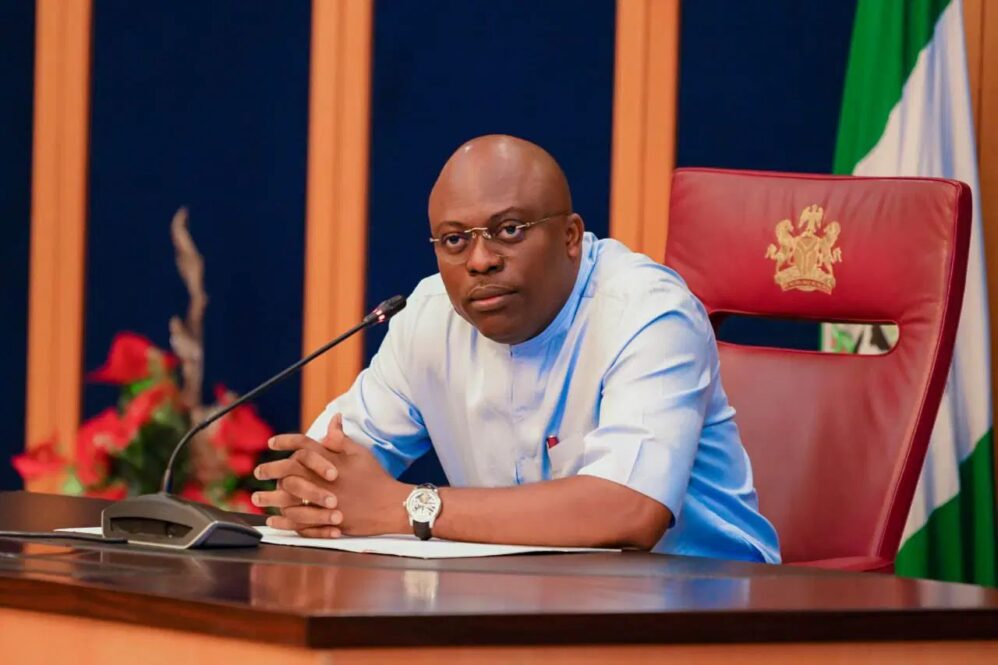
FG Defends Rivers State Emergency at Supreme Court, Seeks Dismissal of PDP Governors’ Suit
Abuja, May 12, 2025 – The Federal Government has mounted a robust defense at the Supreme Court over its controversial declaration of a state of emergency in Rivers State, urging the apex court to dismiss a suit filed by 11 Peoples Democratic Party (PDP) governors seeking to nullify the proclamation and restore suspended state officials.
Background: Emergency Rule Sparks Legal Battle
President Bola Tinubu declared a state of emergency in Rivers State on March 18, 2025, following a prolonged political crisis that paralyzed governance. The move led to the suspension of Governor Siminalayi Fubara, Deputy Governor Ngozi Odu, and all elected members of the State House of Assembly for an initial six-month period. Rear Admiral Ibokette Ibas (retd.) was appointed sole administrator of the state, with the National Assembly ratifying the declaration through a voice vote.
Displeased with the federal intervention, 11 PDP-governed states-Adamawa, Enugu, Osun, Oyo, Bauchi, Akwa Ibom, Plateau, Delta, Taraba, Zamfara, and Bayelsa-filed suit SC/CV/329/2025 at the Supreme Court. They argue that the President lacks the constitutional authority to suspend democratically elected state leaders and replace them with unelected appointees, and that the National Assembly’s approval via voice vote violates constitutional requirements for a two-thirds majority.
FG’s Defense: No Locus Standi, No Justiciable Dispute
In its preliminary objection and counter-affidavit, the Federal Government, represented by a team of 16 lawyers including 10 Senior Advocates of Nigeria, contends that the PDP governors lack locus standi and that their suit is hypothetical, academic, and speculative12. The government describes the PDP states as “busy-bodies,” arguing that the emergency declaration in Rivers does not directly affect them or their governors.
The Attorney General of the Federation (AGF) further asserts that the Supreme Court’s original jurisdiction only applies to disputes between the Federation and a state where a legal right is in question. According to the AGF, the plaintiffs have not disclosed any such dispute, nor have they suffered any injury distinct from other Nigerians.
Justification for Emergency Rule
Defending the emergency declaration, the FG’s affidavit states that Rivers State experienced a severe political crisis, with the governor and House of Assembly unable to work together, resulting in a breakdown of governance. The President’s intervention, according to the government, was necessary to prevent a drift into greater violence and restore peace and security.
“There was actual breakdown of public order and public safety in Rivers state before the President declared a state of emergency. The suspension of the governor, deputy governor, and members of the State Assembly… was required for the restoration of peace and security,” the government’s affidavit stated.
National Assembly and Further Objections
The National Assembly, also named as a defendant, has filed its own objection, urging the Supreme Court to dismiss the suit for lack of merit and jurisdiction. It requests N1 billion in costs against the plaintiffs, describing their action as frivolous and speculative13. The legislature maintains that the manner of approving the emergency proclamation does not affect the civil rights or obligations of the plaintiff states.
What the PDP Governors Seek
The PDP governors are asking the Supreme Court to:
- Nullify the state of emergency proclamation as published in Official Gazette No. 47 of 2025.
- Issue a perpetual injunction restraining the FG and National Assembly from suspending or interfering with state officials via emergency proclamations.
- Rule that the President cannot lawfully suspend or replace governors, deputies, or state assemblies with unelected appointees under a state of emergency.
Next Steps
The Supreme Court is expected to announce a hearing date for the commencement of arguments on the suit. The outcome will have far-reaching implications for federal-state relations and the constitutional limits of emergency powers in Nigeria.











674a6p
0klxrw
dnhppr